Learn to build mobile applications for today’s most popular platform: Apple’s iPhone, iPod Touch and iPad. In this dynamic, five-day workshop, you’ll get up to speed on the basics, including the Cocoa programming environment, the Xcode suite of tools, the Objective-C language, and Instruments, a tool to help debug your applications. And then you’ll create real iPhone applications.
Class goals :
What you will learn:
X-Code, and how to program in Objective-C
The basics of an iPhone application
Parse XML feeds available from the Internet, and make use of the Web View Controller
About multimedia functions – How to play audio and video files
Use of the GPS and Map Kit functions
How to publish an iPhone application
You will learn how to write 3 iPhone applications:
An online News reader
A multimedia audio and video player
A GPS tool
Content of Apple iPhone / iPad App Developer
Course Contents
Day 1 – The Tools and The User Interface
Introducing the iPhone, iPod Touch and iPad
The iOS Developer Center, Programme and SDK
Introducing the Tools
Creating our first project
The window, a view and a view controller
Discussing, designing and prototyping the UI
Building the Application UI and introducing the components
The emphasis on this course is on programming. The course commences with a detailed overivew of Objective-C 2.0 and the Foundation Framework. The early GUI examples are developed programmatically, outside of Interface Builder so as to provide a feel for the framework and its constituent parts, and an understanding of serialisation.
Class goals :
As well as developing proficiency in working with XCode and Interface Builder attendees will learn how to design effective event driven user interface based applications including:
Implementing code for drawing and animation
Laying out and managing user interface widgets such as buttons, text fields, sliders and scoll bars
Kanipulate table views
Persist (save) application state and user data
Connect to interface objects both by using Interface Builder and by direct programming
Content of Cocoa Programming
Basic Concepts of Object-Oriented Analysis and Design
Overview of the Cocoa framework architecture
Mastering the XCode IDE (Integrated Development Environment)
creating and building projects
running and debugging applications
working with the class and documentation browsers
Intensive overview of ObjectiveC
dynamic typing
dynamic binding
dynamic loading
The Runtime System
dynamic method lookup
resolution of unmatched selectors
message forwarding
Dynamic Properties
use of @property to declare accessor methods
use of @synthesize to synthesize accessor methods
Categories and Protocols
Foundation Framework
delegation
key-value coding
mutable subclasses
Files and URLs
storage and retrieval of filesystems and web data
Memory Management
reference counting
garbage collection
autorelease pools
Property lists and Key-Value pair coding idioms
Application Class and the App Delegate
window server and the main event loop
managing main window and key window status
methods implemented by the delegate
application configuration
Windows and Panels
Writing code to create and manage windows
window delegate methods
Menus and Submenus
creating and modifying
adding and removing menu items dynamically
Views and Responders
handling mouse and keyboard events
drawing to the screen
View hierarchies
implementing custom drawing functionality
Animation
the core animation layers
layer backed views
custom animation
Controls and cells
action methods and the targe-action idiom
grid layout of buttons and text fields
String – object conversion
Formatters
built in formatter classes
creating custom formatter classes
Understanding object oriented patterns
Model View Controller pattern
Composite pattern
Visitor pattern
Cocoa bindings
model-view synchronisation
the key-value observing protocol
NSController hierarchy
NSEditor hierarchy
customising binding behaviour
Data persistence and object-relational mappings
data modeling
persistence stores
Text handling
rich text formats
cutting, copying, pasting
Data sources and Table Views
Interface Builder
.nib and .xib files
archiving and unarchiving of objects
file ownership
outlets and actions
NSBundle
dynamic loading of .nib files
Storage and retrieval of user settings
Training Cocoa Programming
Onze voordelen :
Type of training: Inter-company, intra-company and individual
100% flexible & personalised training : You choose the place, the dates and the training program
Offer request : Response within 24 hours
50% discount for SME’s from Brussels-Capital Region
Free parking, lunch & drinks
Free use of our Digital Competence Centre: Manuals, courses, exercises, …
The emphasis on this course is on programming. The course commences with a detailed overivew of ObjectiveC 2.0 and the Foundation Framework. The early iPhone SDK GUI examples are developed programmatically, outside of Interface Builder so as to provide a feel for the framework and its constituent parts, and an understanding of serialisation.
Class goals :
As well as developing proficiency in working with XCode and Interface Builder attendees will learn how to design effective event driven user interface based applications including:
implementing code for drawing and animation
setting up and managing UI widgets such as buttons, text fields, and pickers
how to persist (save) application state and user data
how to connect to interface objects both by using Interface Builder and by direct programming
how to access iPhone user input from touches, as well as from the accelerometer and Core Location
how to make best use of iPhone’s table views and navigation controllers
Content of Cocoa Touch Programming
Basic Concepts of Object-Oriented Analysis and Design
Overview of the iPhone Cocoa Touch framework architecture
Mastering the XCode IDE (Integrated Development Environment)
creating and building projects
running and debugging applications
working with the class and documentation browsers
Intensive overview of ObjectiveC
dynamic typing
dynamic binding
dynamic loading
The Runtime System
dynamic method lookup
resolution of unmatched selectors
message forwarding
Dynamic Properties
use of @property to declare accessor methods
use of @synthesize to synthesize accessor methods
Categories and Protocols
Foundation Framework
delegation
key-value coding
mutable subclasses
Files and URLs
storage and retrieval of filesystems and web data
Memory Management
reference counting
garbage collection
autorelease pools
Property lists and Key-Value pair coding idioms
Understanding object oriented patterns
Model View Controller pattern
Composite pattern
Visitor pattern
iPhone UIKit design pattern application
Table Views
UITableView
UITableViewController
data source method idiom
delegate method idiom
Navigation – patterns and idioms
iPhone navigation controller
iPhone tab bar controller
Touch Events
patterns and idioms for handling user touch
Customisation of iPhone UI components
Core Graphics framework
Core Animation framework
image display and manipulation
animation design and implementation
Data persistence
types of data store
principles
patterns and idioms
Memory Management
retain counts
autorelease pools
Processing accelerometer input
Integrating applications with Core Services such as
the Address Book
Maps
Safari
Mail
Dynamic Loading of application modules
Performance monitoring
Testing and debugging
Training Cocoa Touch Programming
Onze voordelen :
Type of training: Inter-company, intra-company and individual
100% flexible & personalised training : You choose the place, the dates and the training program
Offer request : Response within 24 hours
50% discount for SME’s from Brussels-Capital Region
Free parking, lunch & drinks
Free use of our Digital Competence Centre: Manuals, courses, exercises, …
This course is for those who have relatively little programming experience. Unlike many Objective C programming courses, this course covers the underlying C on which Objective C is based in considerable detail. It also provides a sound introduction to Object Oriented programming concepts and practice and introduces and makes extensive use of UML diagrams to explain and communicate these concepts and practices.
Class goals :
This course is for those who have relatively little programming experience. Unlike many Objective C programming courses, this course covers the underlying C on which Objective C is based in considerable detail. It also provides a sound introduction to Object Oriented programming concepts and practice and introduces and makes extensive use of UML diagrams to explain and communicate these concepts and practices.
Content of A Comprehensive Introduction to Objective-C Programming
Overview of C and Objective C
Introduction to Object Oriented concepts and Object Oriented Programming
Mastering the XCode IDE (Integrated Development Environment)
creating and building projects
The C foundations of Objective C
basic data types
variables, operators, expressions and operators
functions
flow control
if – else, and switch statements
for, while and do – while statements
break, continue, goto
arrays and pointers
data structures
Introduction to Object Oriented Thinking and Programming
classes
instances
inheritance
polymorphism
Understanding the Objective C runtime
creation, management and destruction of objects
class interface specification
visibility modifiers
class implementation
creating instances of classes
invoking methods on instances
Advanced Topics
Dynamic typing and binding
the id type
how dynamic binding works
using isKindOf to determine the type of an instance
case study: linked lists containing a variety of node types
protocols
basic concept
inheritance of protocols
conformsTo
Categories
Categories as an alternative to subclassing
Introduction to the Objective C Foundation Classes
Introduction to Frameworks
Overview of the Cocoa framework
Overview of Cocoa Touch
Training A Comprehensive Introduction to Objective-C Programming
Onze voordelen :
Type of training: Inter-company, intra-company and individual
100% flexible & personalised training : You choose the place, the dates and the training program
Offer request : Response within 24 hours
50% discount for SME’s from Brussels-Capital Region
Free parking, lunch & drinks
Free use of our Digital Competence Centre: Manuals, courses, exercises, …
This Sun Microsystems Solaris Operating System training course introduces the delegate to the main concepts of the SOLARIS Operating System. The most commonly used commands and utilities are described in detail as are the command line wildcard and redirection facilities.
Class goals :
This Solaris Introduction course provides the skills needed to work productively in the SOLARIS environment. The delegates will practise:
Creating, copying, renaming, moving and deleting files and directories
Using the shell’s redirection and pipe facilities
Editing text files using the vi editor
Setting and changing access permissions on files
Monitoring and controlling their own processes
Using the basic file and text searching utilities
Customising their own login environment
Content of Introduction to Solaris
Course Introduction
Administration and Course Materials
Course Structure and Agenda
Delegate and Trainer Introductions
Introduction to the Solaris Operating System
A brief history of UNIX
The UNIX kernel
The UNIX file system
Getting started navigating the file system
The file system structure
Directories and files
Pathnames
Navigating the file system
Exercise: Logging on to the system
Exercise: Navigating the file system
Basic Commands
Command line syntax
Basic file handling commands
Basic Directory handling commands
Filename wildcard characters
Exercise: Manipulating files and directories
Redirection and Pipes
Input redirection
Output redirection
Pipes
Exercise: Using redirection and pipe facilities
Introduction to the vi Editor
Overview of the vi editor
Basic functions
Switching to input mode
Other useful commands
Exercises: Using the vi editor
Exercise: Using more advanced vi features
Searching and Replacing Text
Replacing text
Using the vi editor
Using sed for search and replace
Searching for text with grep
Linking files
Exercises: Searching and Replacing Text
Recalling and Editing Commands
Overview
The bash shell
The korn shell
Exercises: Recall and Edit Commands
File Permissions and Access Control
Users and user groups
File access permissions
Changing file attributes
Switching users and user groups
Linking files
Exercise: Setting and access permissions
Processes
What is a process?
Monitoring processes
Killing processes
Background processes
Job Control
Grouping commands
Exercise: Monitoring and controlling processes
More Basic Commands
The wc (word count) command
The find command
The cut command
The sort command
The finger command
Exercise: Using file handling commands
The User Environment
Customising the .profile or .bash_profile
Customising the .kshrc or .bashrc
Exercise: Setting up an environment
Training Introduction to Solaris
Onze voordelen :
Type of training: Inter-company, intra-company and individual
100% flexible & personalised training : You choose the place, the dates and the training program
Offer request : Response within 24 hours
50% discount for SME’s from Brussels-Capital Region
Free parking, lunch & drinks
Free use of our Digital Competence Centre: Manuals, courses, exercises, …
This comprehensive two-day course aims to equip the novice Solaris/UNIX user with all the skills necessary to navigate the system and make productive use of the tools available, including the Windows system, the vi editor and essential Solaris/UNIX commands. It also forms the necessary foundation for subsequent courses.
Class goals :
A foundation course to get trainees confident in day-to-day Solaris / Unix use. This course provides all the knowledge that applications users will need and forms a good grounding for the power user or administrator who will go on to take other courses
Content of Introduction to Solaris – A Unix / Solaris Foundation
Solaris / UNIX / Linux overview
What are Solaris, Linux and Unix?
Advantages and disadvantages
Basic command examples
Other versions of Unix
Future of Unix
Logistics and support
Getting started
Logging in and out
Basic Gnome Window system use
Keyboard basics
Files, directories and path names
Creating and examining files
Effective use of directories
Moving, copying and removing files
Basic system password security
Online Documentation and the man command
Common problems
The vi editor
Invoking vi
Insert and Append
Moving around the text
Deleting text
Change operators
Other insert operators
Searching for text; Search and replace
Saving and quitting
The Next stage
Introduction to UNIX shells
Shell interaction
Input and Output control using Re-direction and piping
Shell metacharacters (wild cards)
The command history mechanism, and command line editing facilities
The shell quoting mechanism
Setting up and using command aliases
Job and Process monitoring and control
More complex copying and moving
Protecting files and directories using chmod
Shell variables and setting up the environment
Introduction to Solaris utilities
Halting the workstation
Gnome Window System
A thorough examination of the major tools available, such as the Panel, File Manager, Text editor and the Help system
Customising the Workspace and setting basic user preferences
Introduction to networking
Introduction to network concepts
Ethernet Overview
Network basic commands (including logging in to other machines with ssh)
Network File System (NFS) – overview, benefits and uses
Overview of Samba file sharing with Microsoft machines
Training Introduction to Solaris
Onze voordelen :
Type of training: Inter-company, intra-company and individual
100% flexible & personalised training : You choose the place, the dates and the training program
Offer request : Response within 24 hours
50% discount for SME’s from Brussels-Capital Region
Free parking, lunch & drinks
Free use of our Digital Competence Centre: Manuals, courses, exercises, …
This course is designed to give delegates practical experience in the administration of a SVR4 compatible Unix System. Practical work will concentrate on the basic SVR4 commands rather than vendor-specific administration menu driven or GUI tools.
The delegates will practise:
Adding, changing and deleting users and user groups
Managing user passwords
Configuring login files
Running background tasks at regular intervals
Creating file systems
Mounting, monitoring and repairing file systems
Managing file access
Backing up and restoring files and directories using standard utilities
Managing swap space
Adding printers to the system
Monitoring and controlling print jobs
Starting and shutting down the system
Customising start-up and shutdown procedures
Monitoring system performance with the sar utility
Configuring syslog to manage system event messages
Carrying out various housekeeping procedures to manage disk space
Class goals :
To provide the knowledge and skills needed to maintain successful day-to-day operation of a UNIX system.
Content of Unix System Administration
The Administrator’s Role
Role Of A System Administrator
Using The root Login
Tracking The Use Of su
The sysadm Menu System
Account Management
Users, user groups and related system files
Adding new users and user groups (useradd, groupadd)
Changing and deleting users and user groups (usermod, userdel, groupmod, groupdel)
Password and login control (passwd)
User communication facilites (wall, /etc/motd)
Exercise
Login Files
The Bourne and Korn Shell Environments
Environment Variables
The system profile /etc/profile
The user’s .profile
The Korn shell start up file .kshrc
Korn shell options
Listing environment variables and aliases
Skeleton directories
Exercise
Background Jobs
Starting Background Jobs
Using The nice Command
Using cron Processes
Creating crontab Entries
Using The crontab Command
The at Command
Exercise
File System Administration
Physical Disk Organisation
UNIX Partition Slices
File System Device Names
Mounting and Unmounting File Systems
File System Types
File System Structure
File System Creation
Checking And Repairing File Systems
Monitoring Free Space
Exercise
File Access
File Access Criteria (Users, Groups and Permissions)
Default permissions with umask
Changing File Attributes with chmod, chown and chgrp
Testing permissions with su
Exercise
Backup and Restore Facilities
Using The cpio Command
Using The tar Command
Using the dd Command
Backup And Restore Services
Managing Swap Space
Listing, configuring and disabling swap space (swap)
Exercise
Terminals and Printers
Managing terminals
Using the stty command
Terminal model capabilities and commands (infocmp, tput)
The LP print service
LP print service files
Printer configuration (lpadmin)
Printer maintenance – managing printer status, job queues etc.
This course introduces the delegate to the main concepts of the UNIX Operating System. The most commonly used commands and utilities are described in detail as are the command line wildcard and redirection facilities. The mechanisms by which a user acquires a login environment are discussed and the main features of the Korn/Posix/Bash Shells are introduced.
The delegates will practise:
Creating, copying, renaming, moving and deleting files and directories
Using the shell’s redirection and pipe facilities
Editing text files using the vi editor
Setting and changing access permissions on files
Monitoring and controlling their own processes
Using the basic file and text searching utilities
Customising their own login environment
Class goals :
To provide the skills needed to work productively in the UNIX environment.
Content of Unix Introduction
Introduction to the Unix Operating System
A brief history of Unix
The Unix kernel
The UNIX file system
Getting started navigating the file system
The file system structure
Directories and files
Pathnames
Navigating the file system
Exercise: Logging on to the system
Exercise: Navigating the file system
Basic Commands
Command line syntax
Basic file handling commands
Directory handling commands
Filename wildcard characters
Exercise: Manipulating files and directories
Redirection and Pipes
Input redirection
Output redirection
Pipes
Exercise: Using redirection and pipe facilities
Introduction to The vi Editor
Overview of the vi editor
Basic functions
Switching to input mode
Other useful commands
Exercises: Using the vi editor
Exercise: Using more advanced vi features
Searching and Replacing Text
Replacing text
Using the vi editor
Using sed for search and replace
Searching for text with grep
Linking files
Exercises: Searching and Replacing Text
Recalling and Editing Commands
Overview
The bash shell
The korn shell
Exercises: Recall and Edit Commands
File Permissions and Access Control
Users and user groups
File access permissions
Changing file attributes
Switching users and user groups
Linking files
Exercise: Setting and access permissions
Processes
What is a process?
Monitoring processes
Killing processes
Background processes
Job Control
Grouping commands
Exercise: Monitoring and controlling processes
More Basic Commands
The wc (word count) command
The find command
The cut command
The sort command
The finger command
Exercise: Using file handling commands
The User Environment
Customising the .profile or .bash_profile
Customising the .kshrc or .bashrc
Exercise: Setting up an environment
Training Unix Introduction
Onze voordelen :
Type of training: Inter-company, intra-company and individual
100% flexible & personalised training : You choose the place, the dates and the training program
Offer request : Response within 24 hours
50% discount for SME’s from Brussels-Capital Region
This Unix training course is designed to give delegates an overview of the various versions of UNIX available. It is technically orientated to enable staff at all levels to have an appreciation of what UNIX is, and the various features available with the different versions..
The delegates will practise:
What UNIX is
The History of UNIX from Version 7 and the Various Versions Available
OSF/2 POSIX SVR4 Standards
Features of the UNIX Operating System
UNIX Networking Features
What a Process is and how Processes are Controlled
Standard Utilities Available with UNIX
Applications Available
The System Administrator
Class goals :
This UNIX Technical Overview course will provide the delegate with a technical understanding of the UNIX Operating System, from its general structure to its Networking capabilities..
Content of Unix Technical Overview
What is UNIX?
The UNIX Kernel
What is the Shell?
Different Shells Available
History of UNIX
Version 7 to SVR4 (System 5 Release 4)
UNIX Standards
OSF/1 and OSF/2
POSIX Standards
SVR4 Standards
Features of UNIX
Built in Functions
Applications for Users and Programmers
UNIX Networking
UUCP
TCP/IP
NFS (Yellow Pages)
NIS and NIS+
Processes and Background Jobs
Controlling processes in UNIX
Background Jobs
CRON and AT
UNIX Applications
Editors
Programmers Tools
System Start-up and Control
UNIX System Administrator
The Function and Responsibilities of a System Administrator
Training Unix Technical Overview
Onze voordelen :
Type of training: Inter-company, intra-company and individual
100% flexible & personalised training : You choose the place, the dates and the training program
Offer request : Response within 24 hours
50% discount for SME’s from Brussels-Capital Region
Free parking, lunch & drinks
Free use of our Digital Competence Centre: Manuals, courses, exercises, …
This five-day instructor-led M6445 course provides students with the knowledge and skills to plan, implement, and manage Windows Small Business Server 2008.
Class goals :
After completing this training course, students will be able to:
Install Microsoft Windows Small Business Server 2008
Migrate to Microsoft Windows Small Business Server 2008
Configure Windows Small Business Server 2008 using the Windows
Small Business Server 2008 Console
Manage users and groups in Windows Small Business Server 2008
Manage messaging and collaboration in Windows Small Business Server 2008
Manage and monitor Windows Small Business Server 2008
Secure a Windows Small Business Server 2008 network
Expand a Windows Small Business Server 2008 network
Content of Implementing and Administering Windows Small Business Server 2008
Module 1: Plan and Design a Technology Solution for a Small Business
This module explains about the key new features of Small Business Server 2008 and how to create an IT roadmap for the small business using the Business and Technology Assessment Toolkit.
After completing this module, students will be able to:
Describe small business technology challenges
Describe what makes Microsoft Windows Small Business Server 2008 an ideal integrated solution
Differentiate between the Microsoft Windows Small Business Server Standard and Premium versions
Install the Microsoft Business and Technology Assessment Toolkit (BTAT)
Complete the BTAT business assessment templates
Configure options and updates for the BTAT
Manage a BTAT business assessment template
Describe the technology assessment, desktop deployment, and mobile readiness templates contained in the Microsoft BTAT
Create a custom BTAT technology template
Identify the best Microsoft technology solution
Module 2: Installing Microsoft Windows Small Business Server 2008
This module explains how to prepare the server for networking, install Microsoft Windows Small Business Server 2008 and configure the Internet connection
After completing this module, students will be able to:
Establish the background information needed to understand basic networking concepts
Provide groundwork for the Microsoft Windows Small Business Server 2008 installation, covering networking terminology and methodologies
Describe the Microsoft Windows Small Business Server 2008 minimum hardware requirements
Describe the key tasks required to prepare the server hardware for the Windows Small Business Server 2008 operating system installation
Describe the process of the operating system installation
Administer initial administrative tasks in the Microsoft Windows Small Business Server 2008 console and connect the server to the Internet.
Module 3: Managing a Microsoft Windows Small Business Server Environment
This module explains how to manage the Windows Small Business Server 2008 environment using the Windows SBS Console, how to manage Users and Groups, and how to configure user accounts.
After completing this module, students will be able to:
Describe the Windows SBS Console
Administer Windows Small Business Server 2008 using the task-based GUI in the Windows SBS Console
Create and manage user accounts in Microsoft Windows Small Business Server 2008
Administer specific user account properties
Configure access permissions and disk quota management
Describe user roles
Standardize common user properties using roles
Create and manage groups in Windows Small Business Server 2008
Describe group types and scopes
Module 4: Manage and Configure Messaging
This module explains how to manage user messaging, mobile device, Outlook and other settings using the Windows Small Business Server 2008 console and Exchange Management console. Students will learn to implement e-mail protection from spam and viruses.
After completing this module, students will be able to:
Configure e-mail protocols using the Windows Small Business Server 2008 console
Configure the appropriate DNS routing records
Configure e-mail forwarding to specific recipients
Configure e-mail protection using the Exchange Server
Configure e-mail protection using Forefront Security Server for Exchange
Configure additional send and receive connectors in Exchange Server 2007 using the Exchange Management console
Configure mobile devices
Describe troubleshooting messaging issues
Identify tracking messages
Describe mailbox statistics
Configure OWA in Microsoft Windows Small Business Server 2008
Module 5: Manage and Configure Collaboration
This module explains how to manage the intranet site, create new SharePoint sites, install Web applications and modify and manage site settings.
After completing this module, students will be able to:
Manage the preconfigured intranet site using administrative tasks in the Windows SBS 2008 console
Describe Windows SharePoint Services groups, user roles and permissions
Create a new SharePoint site using the central administration site
Configure and manage access to the SharePoint site
Administer the SharePoint site using central administration tasks
Customize the Windows SharePoint site using a Microsoft application template
Module 6: Add Client Computers and Devices to the Network
This module explains how to add client computers, printers and faxes to the Small Business Server 2008 network.
After completing this module, students will be able to:
Describe joining a client computer to the Windows Microsoft Windows Small Business Server 2008 network
Administer access to a client PC on the Windows Microsoft Windows Small Business Server 2008 network
Describe performing the most commonly used administrative tasks for a client PC
Install a shared printer on the Microsoft Windows Small Business Server 2008 network
Configure a shared printer on the Microsoft Windows Small Business Server 2008 network
Install a fax device on the Microsoft Windows Small Business Server 2008 network
Module 7: Manage and Configure Remote Access
This module explains how to manage the commonly used tasks for establishing remote access to the Microsoft Windows Small Business Server 2008 network and its resources.
After completing this module, students will be able to:
Describe how certificates work
Describe installing a self-signed certificate on the Windows Small Business Server 2008 server and client computer
Describe installing a self-signed certificate on a mobile device
Configure a virtual private network for users to access network resources from a remote computer
Administer the Windows Server Firewall
Configure ports for services and applications
Administer Remote Web Workplace
Configure user access to network resources using a Web browser
Module 8: Manage and Configure Security
This module explains the key security tasks and security best practice for managing the Windows Small Business Server 2008 environment.
After completing this module, students will be able to:
Plan in-depth security for the Windows Small Business Server 2008 network
Configure distribution of updates and hotfixes for servers and computers on the Microsoft Windows Small Business Server 2008 network
Describe the key features of the Windows Small Business Server 2008 Best Practices Analyzer 2008
Configure a shared folder controlling user access permissions
Configure blocking unwanted content in the shared folder
Configure Windows Firewall with Advanced Security settings and rules for network security
Module 9: Manage Data Folders and Backup
This module explains how to manage server storage using administrative tasks in the Windows Small Business Server 2008 console. Students learn to plan and prepare for disasters and data recovery, and configure and administer backups.
After completing this module, students will be able to:
Manage server storage by moving databases and data folders
Create a disaster recovery plan
Identify risks
Describe business continuity considerations
Implement Disaster Recovery strategies
Describe testing and reviewing a Disaster Recovery plan
Configure protection of the operating system and application data using the Microsoft Windows Small Business Server 2008 backup wizard
Configure backup media and schedule
Configure protection of individual server applications using standard tools
Describe business critical data and prioritizing data sets for backup
Recover a failed Windows Small Business Server 2008 server
Module 10: Monitoring and Maintaining System and Services Availability
This module explains how to maintain the Windows Small Business Server 2008 using native maintenance and reporting tools and utilities.
After completing this module, students will be able to:
Describe Microsoft Windows Small Business Server 2008 reporting
Administer monitoring and reporting in SBS
Describe the ability of Microsoft Windows Reliability and Performance monitor to examine how programs affect your computer’s performance
Describe monitoring system performance in real time and by collecting log data for later analysis
Configure hard disks, volumes and partitions in Windows Small Business Server 2008 using the disk management utility
Perform most disk-related tasks without restarting the system
Create and manage point-in-time copies of files that are located in shared resources
Describe how to recover previous versions of files
Module 11: Migrating from Microsoft Windows Small Business Server 2003
This module explains how to migrate from Windows Small Business Server 2003 and Windows Server 2003 to Microsoft Windows Small Business Server 2008.
After completing this module, students will be able to:
Prepare the source server
Back up the source server
Verify network connection
Raise the functional level in Active Directory
Evaluate server health
Install service packs
Plan LOB application migration
Apply the Migration Preparation Tool
Review the File Migration Wizard
Create a migration answer file
Collect information
Run the answer file generator
Copy the answer file to the target server
Install Microsoft Windows Small Business Server 2008 in migration mode
This module explains how to expand the Windows Small Business Server 2008 network and configure server roles and applications, including premium applications on the additional Windows Servers.
After completing this module, students will be able to:
Install and configure Windows Server 2008 on the SBS 2008 network
Identify improvements in Windows Server 2008
Perform initial configuration tasks
Identify supported server roles in SBS 2008
Describe server management options
Install SQL Server on a second server in the Windows Small Business Server 2008 network
Manage SQL Server on the Windows Small Business Server 2008 network
Configure Terminal Services for remote access to shared applications
Configure a Web access point
Configure a virtualized server computing environment
Improve efficiency of your computing resources
Describe licensing options in Windows Small Business Server 2008
Manage licenses in Windows Small Business Server 2008
Module 14: Advanced Topics and Troubleshooting
This module explains how to use native Windows tools and utilities to configure technologies that help protect the computer from unwanted traffic, and administer and troubleshoot the Windows Server 2008 from the command line.
After completing this module, students will be able to:
Describe the key difference in the Advanced Mode Windows Small Business Server 2008 console
Administer Windows Small Business Server 2008 using the Advance Mode SBS console
Administer the Windows Small Business Server 2008 Console
Administer SBS 2008 Server Applications
Describe the key features of Windows PowerShell
Administer the Windows Small Business Server 2008 network using Windows PowerShell commands
Describe moving data in SBS 2008 using PowerShell
Describe IIS 7.0 and its role
Perform common administrative tasks for administering IIS 7.0
Troubleshooting DNS
Troubleshooting TS Gateway
Module 15: Manage the Windows Small Business Server 2008 Environment using Group Policy
This module explains how to implement specific configurations for users and computers using Group Policy settings.
After completing this module, students will be able to:
Administer Group Policies in a Windows Small Business Server 2008 environment
Configure Group Policies using the GPMC
Configure object auditing using Group Policy
Configure software applications for deployment using Group Policy
Troubleshooting GPOs
Training Implementing and Administering Windows Small Business Server 2008
Onze voordelen :
Type of training: Inter-company, intra-company and individual
100% flexible & personalised training : You choose the place, the dates and the training program
Offer request : Response within 24 hours
50% discount for SME’s from Brussels-Capital Region
Free parking, lunch & drinks
Free use of our Digital Competence Centre: Manuals, courses, exercises, …




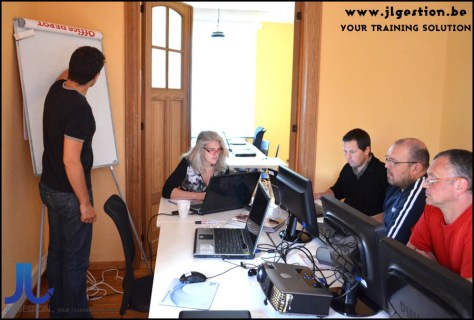
 Training-brussels - business training center in Brussels