Crystal Reports 11 Level 1 is the first course in the Crystal Reports 11 series. In this course, you will build basic list and group reports that work with almost any database.
Class goals :
After completing this course, students should be able to:
Create a list report by using data from an existing database
Locate and present data in a specified order
Create groups to summarize report data
Build formulas to add non-database data to a report and display data differently
Format reports
Enhance reports by adding and modifying elements in a report
Create single data series charts
Distribute report data to other users
Content of Crystal Reports Version 11 Introduction
Creating a Report
Set Default Report Settings
Specify Fields for a New Report
Preview the Report
Modify Field Display
Add a Report Title
Position Fields
Add Fields from Additional Tables
Displaying Specific Report Data
Find Data
Sort Data
Filter Data by Single Criterion
Grouping Report Data
Insert a Group
Add Summaries
Format Summary Information
Change Group Options
Add an Additional Group
Filter by Group
Create a Top N Sort Group
Building Formulas
Write a Formula
Create a Formula
Edit a Formula
Combine Fields by Formula
Delete a Formula
Filter Data by Multiple Criteria
Modify a Filter Using an OR Operator
Create a Parameter Field
Account for Null Fields in a Formula
Formatting Reports
Remove White Space
Insert Page Header/Footer Data
Add Borders, Boxes, and Lines
Change Field Background Color
Change the Margins
Enhancing Reports
Add a Watermark
Insert Objects Using Object Linking and Embedding
Modify Formatting Based on Data Value
Suppress Report Sections
Insert Hyperlinks
Hide Blank Report Sections
Creating and Modifying Pie Charts
Create a Pie Chart with a Drill-down
Modify Chart Text
Format a Chart
Present a Chart by Group
Distributing Data
Export to PDF
Export to Microsoft Excel File
Export to an Microsoft Access Database File
Create a Report Definition
Create Mailing Labels
Training Crystal Reports Version 11 Introduction
Onze voordelen :
Type of training: Inter-company, intra-company and individual
100% flexible & personalised training : You choose the place, the dates and the training program
Offer request : Response within 24 hours
50% discount for SME’s from Brussels-Capital Region
Free parking, lunch & drinks
Free use of our Digital Competence Centre: Manuals, courses, exercises, …
This is a course that covers SQL for querying and modifying databases, as well as database transaction processing, creation and dropping of tables and databases and tables. The aim is to provide a sound foundation of SQL, both in general, and in the context of PostgreSQL.
The course is a hands on course and the emphasis is on creating SQL scripts textually, rather than through a GUI.
Class goals :
This is a course that covers SQL for querying and modifying databases, as well as database transaction processing, creation and dropping of tables and databases and tables. The aim is to provide a sound foundation of SQL, both in general, and in the context of PostgreSQL.
The course is a hands on course and the emphasis is on creating SQL scripts textually, rather than through a GUI.
Content of Foundations of SQL for PostgreSQL
Introduction to Database Concepts
overview of relational database and the client – server model
database concepts – tables, rows and columns, primary keys and foreign keys
database data types
Introduction to SQL
creating and running SQL scripts
overview of SQL syntax
guidelines for writing readable and maintainable SQL
Retrieving data – SELECT, WHERE and ORDER
Overview of the SELECT statement and its clauses
specifying source table(s) – using the FROM clause
specifying which columns in a table ( or the entire table ) are to be retrieved
result sets
Renaming columns using aliases
Sorting the query results using ORDER BY
Filter Results using the WHERE clause
logical expressions using numeric and string comparison Operators
basic numeric and string based filtering
filtering based on results of calculations
duplicate removal – using DISTINCT
combining and extending logical expressions using AND , OR and NOT
specifing ranges – BETWEEN and IN
handling NULL values
basic pattern matching – LIKE
Using UNION, INTERSECT and EXCEPT to join SELECT Results
Site administrators perform an important function of managing the Moodle™ site on a day-to-day basis. They often have exclusive access to settings and options that can impact dramatically on the experience of participants within courses and the degree to which the Moodle™ site aligns with the wider objectives of the organisation.
Class goals :
On this Moodle™ training course, delegates will learn how to:
Adapt the layout of a Moodle™ site
Identify global settings that impact on security, privacy and access
Identify and manage options and settings that impact on course design and the experience for participants
Make changes to the appearance of the site using options within the Moodle™ administration console
Manually create and manage accounts Identify, assign, modify, create and manage roles
Content of Moodle™ Administrator Course
Site layout options
Site / Course back up
Global privacy and access settings
Using in built options to modify the site appearance
Customising the interface terminology
Settings and options that impact on the experience of participants in courses
Creating and managing user accounts with manual and email authentication
The roles system
Monitoring user activity
Training Moodle™ Administrator Course
Onze voordelen :
Type of training: Inter-company, intra-company and individual
100% flexible & personalised training : You choose the place, the dates and the training program
Offer request : Response within 24 hours
50% discount for SME’s from Brussels-Capital Region
Free parking, lunch & drinks
Free use of our Digital Competence Centre: Manuals, courses, exercises, …
This course provides students with the knowledge and skills that are required to manage accounts and resources, maintain server resources, monitor server performance, and safeguard data in a Microsoft Windows Server™ 2003 environment.
Class goals :
On completion of this Windows 2003 training course, delegates should be able to:
Create and populate organizational units with user and computer accounts
Manage user and computer accounts
Create and manage groups
Manage access to resources
Implement printing
Manage printing
Manage access to objects in organizational units
Implement Group Policy
Manage the user and computer environment by using Group Policy
Audit accounts and resources
Prepare to administer server resources
Configure a server to monitor system performance
Monitor system performance
Manage device drivers by configuring device driver signing and restoring a device driver
Manage hard disks
Manage data storage
Manage disaster recovery
Maintain software by using Microsoft Software Update Services
Content of Managing and Maintaining a Microsoft Windows Server 2003 Environment
Part 1: Managing a Microsoft Windows Server 2003 Environment
Introduction to Administering Accounts and Resources
This module explains how to administer accounts and resources on computers running Microsoft Windows Server 2003 software in a networked environment.
Multimedia: Introduction to Administering Accounts and Resources
The Windows Server 2003 Family
Logging on to Windows Server 2003
Installing and Configuring Administrative Tools
Creating User Accounts
Creating Computer Accounts
Creating an Organizational Unit Hierarchy
Managing User and Computer Accounts
This module explains how to modify user and computer accounts on computers running Microsoft Windows Server 2003 in a networked environment.
Modifying Users and Computer Account Properties
Enabling and Unlocking User and Computer Accounts
Creating a User Account Template
Locating User and Computer Accounts in Active Directory
Saving Queries
Resetting User and Computer Accounts
Moving Domain Objects
Managing Groups
This module explains how to perform various administrative functions by using groups.
Creating Groups
Managing Group Membership
Strategies for Using Groups
Modifying Groups
Using Default Groups
Best Practices for Managing Groups
Managing Access to Resources
This module explains how to enable resource access with permissions, manage access to files and folders by using permissions, and manage permission inheritance.
Overview of Managing Access to Resources
Managing Access to Shared Folders
Managing Access to Files and Folders Using NTFS Permissions
Determining Effective Permissions
Managing Access to Shared Files Using Offline Caching
Implementing Printing
This module explains how to implement printing in a Windows Server 2003 environment.
Multimedia: Introduction to Printing in the Windows Server 2003 Family
Installing and Sharing Printers
Managing Access to Printers Using Shared Printer Permissions
Managing Printer Drivers
Implementing Printer Locations
Managing Printing
This module explains how to set up a network-wide printing strategy to meet the needs of users and troubleshoot installation or configuration problems.
Changing the Location of the Print Spooler
Setting Printer Priorities
Scheduling Printer Availability
Configuring a Printing Pool
Managing Access to Objects in Organizational Units
This module explains the permissions available for managing access to Active Directory objects, how to move objects between organizational units in the same domain, and how to delegate control of an organizational unit.
Multimedia: The Role of the Organizational Unit
Modifying Permissions for Active Directory Objects
Delegating Control of Organizational Units
Implementing Group Policy
This module explains the purpose and function of Group Policy in a Microsoft Windows Server 2003 environment. It also explains how to implement Group Policy objects (GPOs) and manage GPOs.
Implementing GPOs
Implementing GPOs on a Domain
Managing the Deployment of Group Policy
Managing the User Environment by Using Group Policy
This module explains how to use Group Policy to configure Folder Redirection, Microsoft Internet Explorer connectivity, and the desktop.
Configuring Group Policy Settings
Assigning Scripts with Group Policy
Configuring Folder Redirection
Determining Applied GPOs
Introduction to Security in Windows Server 2003
This module explains how to use Group Policy to configure Folder Redirection, Microsoft Internet Explorer connectivity, and the desktop.
Overview of Security in Windows Server 2003
Using Security Templates to Secure Computers
Testing Computer Security Policy
Configuring Auditing
Managing Security Logs
Part 2: Maintaining a Microsoft Windows Server 2003 Environment
Preparing to Administer a Server
This module explains how to administer a server. It describes how to manage servers remotely, what tools to use, and the rights and permissions that are needed to administer a server.
Administering a Server
Configuring Remote Desktop to Administer a Server
Managing Remote Desktop Connections
Preparing to Monitor Server Performance
This module explains how to monitor server performance by using performance tools, configure and manage performance logs, configure and manage alerts, and manage system monitor views.
Introduction to Monitoring Server Performance
Performing Real-Time and Logged Monitoring
Configuring and Managing Counter Logs
Configuring Alerts
Monitoring Server Performance
This module explains how to collect performance data by monitoring primary server subsystems. It also covers how to identify system bottlenecks by using the Performance console and Task Manager in Microsoft Windows Server 2003.
Monitoring Server Memory
Monitoring Processor Usage
Monitoring Disks
Monitoring Network Usage
Maintaining Device Drivers
This module explains how to maintain device drivers.
Configuring Device Driver Signing Options
Using Device Driver Rollback
Managing Disks
This module explains how to manage disks and how to use the tools to manage and set up disks.
Preparing Disks
Managing Disk Properties
Managing Mounted Drives
Converting Disks
Creating Volumes
Importing a Foreign Disk
Managing Data Storage
This module explains the Encrypting File System (EFS), which contributes to the safe storage of data and helps to keep the network from harm. It also explains how to administer disk quotas.
Managing NTFS File Compression
Configuring File Encryption
Implementing Disk Quotas
Managing Disaster Recovery
This module explains how to plan for a computer disaster and how to use the features of Windows Server 2003 to prevent a disaster or recover when one occurs.
Preparing for Disaster Recovery
Backing Up Data
Scheduling Backup Jobs
Restoring Data
Recovering from Server Failure
Selecting Disaster Recovery Methods
Maintaining Software by Using Software Update Services
This module explains how to use Microsoft Software Update Services to manage and distribute critical software updates that resolve known security vulnerabilities and other stability issues.
Introduction to Software Update Services
Installing and Configuring Software Update Services
Managing a Software Update Services Infrastructure
Training Managing and Maintaining a Microsoft Windows Server 2003 Environment
Onze voordelen :
Type of training: Inter-company, intra-company and individual
100% flexible & personalised training : You choose the place, the dates and the training program
Offer request : Response within 24 hours
50% discount for SME’s from Brussels-Capital Region
Free parking, lunch & drinks
Free use of our Digital Competence Centre: Manuals, courses, exercises, …
SUSE Linux Enterprise Server is a highly reliable, interoperable and manageable server operating system that enables firms to cost-effectively and securely deliver mission critical services. In this class you will learn the tasks essential to server administration.
Class goals :
Delegates will learn how to:
Install and configure SUSE Linux Enterprise Server 11
Manage printing
Configure a web server
Perform health checks
And much more
Content of SUSE Linux Enterprise Server 11 Administration
Configure Fundamental Networking Services
Manage Printing
Configure and Use Open LDAP
Configure and Use Samba
Configure a Web Server
Configure and Use IPv6
Perform a Health Check and Performance Tuning
Create Shell Scripts
Deploy SUSE Linux Enterprise
Xen
LiveFire Exercise
Training SUSE Linux Enterprise Server 11 Administration
Onze voordelen :
Type of training: Inter-company, intra-company and individual
100% flexible & personalised training : You choose the place, the dates and the training program
Offer request : Response within 24 hours
50% discount for SME’s from Brussels-Capital Region
Free parking, lunch & drinks
Free use of our Digital Competence Centre: Manuals, courses, exercises, …
The SUSE Linux Enterprise Server 11: Certified Linux Engineer course prepares candidates for the CLE 11 Practicum exam. The SUSE Linux Enterprise Server: Certified Linux Expert 11 (3107) is designed to enable professional administrators to perform specialized tasks on SUSE Linux Enterprise Server 11 concerning networking, storage, virtualisation, and disaster preparedness and recovery.
Class goals :
This course teaches you how to perform the following SUSE Linux Enterprise Server 11 administrative tasks:
Manage networking
Manage server storage
Work with Xen virtualization
Harden servers
Update servers
Monitor server health
Prepare servers for disasters
Content of SUSE Linux Enterprise Server 11: Certified Linux Engineer
Manage Networking
Configure Bridges
Bonding Interfaces ( Teaming NICS )
VLAN Tagging
Server Storage
Configuring iSCSI Targets
Configuring iSCSI Clients ( Initiators )
Xen
Install XEN Visualization
Use vm-install command line options
Harden Servers
Strengthen Security on SLES11
Use APPARMOR
Use AIDE
Update Servers
Implement SMT to deploy updates to SLES11
Prepare for Disasters
LVM Snapshots
Multipath for remote storage
Monitor Servers
Configure and use NAGIOS for server monitoring
Training SUSE Linux Enterprise Server 11: Certified Linux Engineer
Onze voordelen :
Type of training: Inter-company, intra-company and individual
100% flexible & personalised training : You choose the place, the dates and the training program
Offer request : Response within 24 hours
50% discount for SME’s from Brussels-Capital Region
Free parking, lunch & drinks
Free use of our Digital Competence Centre: Manuals, courses, exercises, …
This course covers the installation and use of Navicat for administering PostgreSQL database. It will cover the administration, tuning, backup and recovery of PostgreSQL databases using the Navicat Database Administration Tool.
Class goals :
This course covers the installation and use of Navicat for administering PostgreSQL database. It will cover the administration, tuning, backup and recovery of PostgreSQL databases using the Navicat Database Administration Tool.
Content of PostgreSQL Administration using Navicat
INavicat for PostgreSQL – installation and configuration
Configuring connectivity
SSL vs. non SSL
Tunneling connections through SSH
Understanding Connection keep-alives
connection parameter storage
Navicat and Cluster Management
Adding and dropping databases
Configuring database defaults
Carrying out database VACCUUM and ANALYZE operations
Duplicating database objects
Using server monitor to modify and manage systems
Backup and Recovery
creating backups
Converting a backup files into an SQL Script
Running recovery scripts
Exporting data using Navicat Data export tools
Working with the Navicat Data Viewer/Editor
Form and Grid Views
BLOB and large text editing
custom display formats
Sorting & Searching
Following Primary Key – Foreign key relationships
more complex record filtering
Working with the Navicat Query Builder
Overview and features – Syntax highlighting. SQL code completion
SQL console
Navicat Query logging
Importing and exporting data
importing via ODBC
importing data from MS-Excel, CSV, Text, DBF …
exporting data to Excel, Access, PDF, HTML
Graphical exploration of database/table structure
Managing schemas, view and stored procedures
Managing privileges amd access control
visual user manager
cloning users and their permissions
group membership management
Overview of the Navicat Report Management Tools
Report Builder
Report Viewer
Training PostgreSQL Administration using Navicat
Onze voordelen :
Type of training: Inter-company, intra-company and individual
100% flexible & personalised training : You choose the place, the dates and the training program
Offer request : Response within 24 hours
50% discount for SME’s from Brussels-Capital Region
Free parking, lunch & drinks
Free use of our Digital Competence Centre: Manuals, courses, exercises, …
Learn to build mobile applications for today’s most popular platform: Apple’s iPhone, iPod Touch and iPad. In this dynamic, five-day workshop, you’ll get up to speed on the basics, including the Cocoa programming environment, the Xcode suite of tools, the Objective-C language, and Instruments, a tool to help debug your applications. And then you’ll create real iPhone applications.
Class goals :
What you will learn:
X-Code, and how to program in Objective-C
The basics of an iPhone application
Parse XML feeds available from the Internet, and make use of the Web View Controller
About multimedia functions – How to play audio and video files
Use of the GPS and Map Kit functions
How to publish an iPhone application
You will learn how to write 3 iPhone applications:
An online News reader
A multimedia audio and video player
A GPS tool
Content of Apple iPhone / iPad App Developer
Course Contents
Day 1 – The Tools and The User Interface
Introducing the iPhone, iPod Touch and iPad
The iOS Developer Center, Programme and SDK
Introducing the Tools
Creating our first project
The window, a view and a view controller
Discussing, designing and prototyping the UI
Building the Application UI and introducing the components
The emphasis on this course is on programming. The course commences with a detailed overivew of Objective-C 2.0 and the Foundation Framework. The early GUI examples are developed programmatically, outside of Interface Builder so as to provide a feel for the framework and its constituent parts, and an understanding of serialisation.
Class goals :
As well as developing proficiency in working with XCode and Interface Builder attendees will learn how to design effective event driven user interface based applications including:
Implementing code for drawing and animation
Laying out and managing user interface widgets such as buttons, text fields, sliders and scoll bars
Kanipulate table views
Persist (save) application state and user data
Connect to interface objects both by using Interface Builder and by direct programming
Content of Cocoa Programming
Basic Concepts of Object-Oriented Analysis and Design
Overview of the Cocoa framework architecture
Mastering the XCode IDE (Integrated Development Environment)
creating and building projects
running and debugging applications
working with the class and documentation browsers
Intensive overview of ObjectiveC
dynamic typing
dynamic binding
dynamic loading
The Runtime System
dynamic method lookup
resolution of unmatched selectors
message forwarding
Dynamic Properties
use of @property to declare accessor methods
use of @synthesize to synthesize accessor methods
Categories and Protocols
Foundation Framework
delegation
key-value coding
mutable subclasses
Files and URLs
storage and retrieval of filesystems and web data
Memory Management
reference counting
garbage collection
autorelease pools
Property lists and Key-Value pair coding idioms
Application Class and the App Delegate
window server and the main event loop
managing main window and key window status
methods implemented by the delegate
application configuration
Windows and Panels
Writing code to create and manage windows
window delegate methods
Menus and Submenus
creating and modifying
adding and removing menu items dynamically
Views and Responders
handling mouse and keyboard events
drawing to the screen
View hierarchies
implementing custom drawing functionality
Animation
the core animation layers
layer backed views
custom animation
Controls and cells
action methods and the targe-action idiom
grid layout of buttons and text fields
String – object conversion
Formatters
built in formatter classes
creating custom formatter classes
Understanding object oriented patterns
Model View Controller pattern
Composite pattern
Visitor pattern
Cocoa bindings
model-view synchronisation
the key-value observing protocol
NSController hierarchy
NSEditor hierarchy
customising binding behaviour
Data persistence and object-relational mappings
data modeling
persistence stores
Text handling
rich text formats
cutting, copying, pasting
Data sources and Table Views
Interface Builder
.nib and .xib files
archiving and unarchiving of objects
file ownership
outlets and actions
NSBundle
dynamic loading of .nib files
Storage and retrieval of user settings
Training Cocoa Programming
Onze voordelen :
Type of training: Inter-company, intra-company and individual
100% flexible & personalised training : You choose the place, the dates and the training program
Offer request : Response within 24 hours
50% discount for SME’s from Brussels-Capital Region
Free parking, lunch & drinks
Free use of our Digital Competence Centre: Manuals, courses, exercises, …


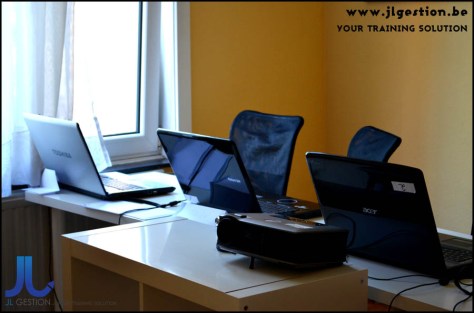
 Training-brussels - business training center in Brussels