This training course is our most advanced Illustrator class and is not for the faint hearted!
Take your Illustrator skills to the MAX and also be prepared for and take the Adobe Certified Expert (ACE) exams in Illustrator which is the highest level of recognition.
Class goals :
What you will learn:
Best practices
Advanced Illustrator techniques
Graphic design, Web design and Digital art concepts
Preparing an identity design and present it to a client
Prepared for the Adobe Certified Expert (ACE) exams in Illustrator
Content of Adobe Illustrator Super Advanced
Working with Artboards
Creating templates
Drawing and transforming objects
Pen tool best practices
Brush types and the Blob brush tool
The Width tool and options with Strokes
Working in Isolation mode
Opacity and Clipping masks
Live paint
Recolour Artwork
Gradients
Tracing photographs and pixel images
Advanced type features
Working with Live effects and the Appearance panel
Graphic styles
Working with Symbols
Shape builder tool
Drawing in perspective
Preparing for Web and Flash
Preparing for print
Adobe Certified Expert Preparation
What to expect on exam day and how to book an exam
Example questions
Practice Exam
Results
What next?
Training Adobe Illustrator Super Advanced
Onze voordelen :
Type of training: Inter-company, intra-company and individual
100% flexible & personalised training : You choose the place, the dates and the training program
Offer request : Response within 24 hours
50% discount for SME’s from Brussels-Capital Region
Free parking, lunch & drinks
Free use of our Digital Competence Centre: Manuals, courses, exercises, …
Creating Rich Digital Publications with InDesign CS5.5′ is a one day course aimed at existing InDesign users. The course is designed to teach you how to produce dynamic electronic publications (not ePubs) using the new features offered by InDesign CS5.5 and the Digital Publishing Suite.
Class goals :
Content of Creating Rich Digital Publications with InDesign CS5.5
Course Intro
What software do you need to produce Digital publications
Designing your InDesign document for Digital publication
Converting InDesign files for digital publishing
Portrait and Landscape views
iPad layout and templates
Creating your documents
Creating layouts
Organising your folder structure
Creating folios
Using the Folio Builder panel
Adding articles
Adding interactivity with the Overlay Creator panel
Slideshows
Image sequences
Document Elements
Adding audio
Adding video
Hyperlinks
Panoramas
Web views
Scrollable frames
HTML Stacks
Pan and Zoom
Assembling your output and publishing
Testing your folio (using Acrobat.com)
Adobe Content Viewer on the iPad
Training Creating Rich Digital Publications with InDesign CS5.5
Onze voordelen :
Type of training: Inter-company, intra-company and individual
100% flexible & personalised training : You choose the place, the dates and the training program
Offer request : Response within 24 hours
50% discount for SME’s from Brussels-Capital Region
Free parking, lunch & drinks
Free use of our Digital Competence Centre: Manuals, courses, exercises, …
Are you working in digital imaging, professional photography, graphic design, publishing or another role that involves day to day use of Photoshop? If so then this course will make your life easier and you’ll see an immediate performance improvement thanks to the new skills you learn by attending.
Class goals :
This Advanced Photoshop training course lets you build on your existing skills and explore some of the more advanced techniques available when working with this increasingly powerful software package.
Content of Adobe Photoshop CS5 Advanced Techniques
Intro to the Advanced Photoshop training course
Adobe Bridge & Mini Bridge
Actions
Advanced masking
Advanced cloning & Content Aware Fill
Advanced Levels and Curves
Advanced Compositing – Stacks
Colour adjustment
Sharpening
Advanced layers
Smart Objects, Smart filters & Smart Layers
Vanishing Point
Advanced filter techniques
Painting Effects
Warping techniques – Puppet Warp
Camera Raw
Photoshop Animation
Photoshop Video
Photoshop and Devices
Adobe Repoussé
HDR Pro
Training Adobe Photoshop CS5 Advanced Techniques
Onze voordelen :
Type of training: Inter-company, intra-company and individual
100% flexible & personalised training : You choose the place, the dates and the training program
Offer request : Response within 24 hours
50% discount for SME’s from Brussels-Capital Region
Free parking, lunch & drinks
Free use of our Digital Competence Centre: Manuals, courses, exercises, …
Final Cut Pro X is a revolutionary video editing application that makes it possible for beginners and seasoned professionals to achieve stunning results. This three-day, hands-on course teaches hard-to-find advanced editing and finishing techniques. Learn how to create fantastic effects using filters creatively, color correct like a pro, and create complex audio mixes.
Class goals :
After completing this course, students will have learnt about:
Working with Compound Clips and auditions
Organizing projects with advanced Metadata techniques
Targeting specific areas to color correct with shape and color masks
Finetuning clips in the timeline with the Precision Editor
Working with Compressor
Creating custom effects and transitions
Finishing and final output
Content of Final Cut Pro X Advanced
Overview of Editing Basics
Review of Basic Editing Techniques
3-point Editing Rule and Track Targeting
Advanced Editing Techniques
Smart Clip Loading
Using Match Frame
Using Replace Edit and Ganging Playheads
Trimming Basics
Basic Rolling
Extend Edit
and Splitting Edits
Advanced Trimming
Trimming from the Keyboard
Trim Edit Window
Dynamic Trimming
Multi-track Trimming and Asymmetrical Trimming
Audio Editing
Adjusting Levels on the Fly
Adjust Levels Dialog
Applying Normalization Gain
Using Audio Filters- sending to Soundtrack Pro and Using the Audio Mixer Window
Multicam Editing
Basic Multicamera Edits
Working with Multiple Angles
Editing Audio and Video Separately
Collapsing and Un-collapsing Multiclips
Match-framing Multiclips
Applying Effects to Multiclips and Multiclips and External Video
Compositing in Final Cut Pro
Basic Compositing Review
Creating Travel Mattes
Adding Graphics from a Layered Photoshop File
Keyframing Basics and Keyframing in the timeline
Mastering Filters
Customizing Filters
Understanding Filter Order
Filter Timing
Limiting Filter Effects
Creating Favoirte Filters
Hiding and showing Filter Controls and Working with Smoothcam
Nesting Sequences
Understanding Nested Sequences
Using Basic Nesting
Nesting in Place
Working Around Render Order
Mixing Sequence Sizes
Nesting as an Editing Tool
Nesting Master Filters and Unnesting
Preparing for Finishing
Nesting Sequences
Unnesting Sequences
Adding Widescreen mattes
Adding BITC
Managing Audio Outputs
Using the Media Manager and Exporting EDLs and XML Files
Troubleshooting Tips
Fixing Screen Direction Errors
Stealing Audio from Another Shot and Removing a Boom
Outputting
Sharing to Apple Devices
Sharing to DVD and BluRay
Sharing for the Web
Using Compressor
Outputting Audio
Exporting Still Frames and Exporting QuickTime Movies
Training Final Cut Pro X Advanced
Onze voordelen :
Type of training: Inter-company, intra-company and individual
100% flexible & personalised training : You choose the place, the dates and the training program
Offer request : Response within 24 hours
50% discount for SME’s from Brussels-Capital Region
Free parking, lunch & drinks
Free use of our Digital Competence Centre: Manuals, courses, exercises, …
This Apple Final Cut Pro (FCP 101) training course is a three-day, hands-on course that teaches students to perform basic editing functions while becoming familiar with the Final Cut Pro user interface. In this course, you will cut a scene from the TNT television series Leverage, create a promo for Seaworld’s ‘Believe documentary’, as well as master filters and effects as you edit a segment of Playing for Change, the international music-creation event.
Class goals :
After completing this course, students will be able to:
Mark clips, using insert, overwrite and drag-and-drop editing
Trim edit points
Use Ripple, Roll, and Extend edits as well as the Slip and Slide tools
Apply filters and changing Motion properties
Edit audio and audio creation
Finish and final output
Content of An Introduction to Final Cut Pro X
Preparing to Edit in Final Cut Pro X
Exploring the Interface
Importing Footage
Organising Clips in an Event
Organising Optimising & Analysing
Organising Media with Keywords
Working in the Project Library
Working in the Event Library
Creating a Rough Cut
Building the Rough Cut
Performing Insert Overwrite & Connect Edits
Adding to the Storyline
Fine-Tuning a Rough Cut
Using the Trimming Tools
Replacing Clips & 3 Point Editing
Auditioning Clips
Adjusting Clip Timing
Creating Secondary Storylines & Compound Clips
Completing the Cut
Editing the Soundtrack
Applying & Modifying Transitions
Creating Hold Frames & Re-timing Video
Controlling Video Quality
Working with Music
Enhancing the Soundtrack
Adding simple titles
Applying Effects & Finishing
Adding Effects
Matching & Correcting Colour
Secondary Colour Correction
Working with Themes & Placeholders
Applying & Animating Titles
Transforming, Cropping & Distorting Images
Working with Generators & Backgrounds
Exporting and Sharing a Project
Publishing for web and devices
Training An Introduction to Final Cut Pro X
Onze voordelen :
Type of training: Inter-company, intra-company and individual
100% flexible & personalised training : You choose the place, the dates and the training program
Offer request : Response within 24 hours
50% discount for SME’s from Brussels-Capital Region
Free parking, lunch & drinks
Free use of our Digital Competence Centre: Manuals, courses, exercises, …
This ActionScript Training class teaches students how to program in ActionScript to make Flash sites more interactive and dynamic.
Class goals :
Learn to work with event handlers
Understand the hierarchy of timelines
Learn to work with target paths
Learn to work with ActionScript’s built-in objects
Learn to write functions
Learn to write flow control statements in ActionScript
Learn to create forms for passing data in and out of Flash
Content of Training ActionScript 3.0
Class Outline
Navigating the Flash Timeline
Placing code on the Flash timeline
Working with Events and Functions
Creating event listeners and event handling functions
Creating navigation with a button click
Creating Animation with ActionScript
Reviewing the starting file
Controlling MovieClip properties with ActionScript
Creating animation using ActionScript tweens
Creating ActionScript in External Files
Creating an ActionScript file
Creating instances of a class file in Flash
Using ActionScript and Components to Load Content
Creating an instance of the List component and setting its parameters
Adding an instance of the UILoader component
Adding a CHANGE event listener to the List component
Loading SWF files into a UILoader component
Creating the gallery file
Adding a scroll bar to the text field
Creating Preloaders in ActionScript 3.0
Tools in the testing environment
Creating a text field and progress bar to track loading
Inserting ActionScript to track progress of the UILoader component
Controlling the frames of a MovieClip to reflect loading progress
Using Arrays and Loops in ActionScript 3.0
Examining the starting file
Adding MovieClip instances to the stage from the Library
Generating multiple instances with a for loop
Adding event listeners to the Block instances
Creating animation using ENTER_FRAME
Adding the testDone() function
Creating a Radio Button Quiz in an ActionScript File
Examining the starting file
Creating a new ActionScript file
Setting up the RadioButtonQuiz class
Adding variables to the RadioButtonQuiz class
Creating the quiz functionality
Formatting text with ActionScript
Creating the quiz
Creating checkAnswer() – the final function
Integrating your new class into the Flash project
Training ActionScript 3.0
Onze voordelen :
Type of training: Inter-company, intra-company and individual
100% flexible & personalised training : You choose the place, the dates and the training program
Offer request : Response within 24 hours
50% discount for SME’s from Brussels-Capital Region
Free parking, lunch & drinks
Free use of our Digital Competence Centre: Manuals, courses, exercises, …
This ActionScript Training class teaches students how to program in ActionScript to make Flash sites more interactive and dynamic.
This XSLT 2.0 training class teaches developers how to us XPath 2.0 and XSLT 2.0 to transform XML documents into HTML, plain text and other XML formats.
Class goals :
Learn to use XPath to access XML elements and attributes
Learn to loop through XML elements
Learn to use conditionals in XSLT
Learn to create and call templates
Learn to work with multiple XSLTs
Learn to reference external XML documents
Content of Training XSLT 2.0 and XPath 2.0
Class Outline
XSLT Basics
eXtensible Stylesheet Language
An XSLT Stylesheet
xsl:template
xsl:value-of
Whitespace and xsl:text
Output Types
Text
XML
HTML and XHTML
XSLT Elements and Attributes
xsl:element
xsl:attribute
Attributes and Curly Brackets
XPath Path Expressions
XPath in XSLT
XPath Expression
XPath Terminology
Context Node
Current Node
Context Size
Proximity Position
Location Paths
Axis
Node Test
Predicate
Accessing Nodes
Abbreviated Syntax
XPath Language Basics
XPath Functions
XPath Operators
XPath Data Types
XPath Expressions
for Expressions
if-then-else Expressions
Flow Control in XSLT
Looping in XSLT
Sorting with XSLT
Looping and Sorting
Conditions with XSLT
XSLT Templates, Parameters and Variables
xsl:apply-templates
xsl:call-template
Passing Parameters
Removing Content
Template Modes
Template Priority
Default Priorities
Assigning Priorities
XSLT Variables
Multiple XML and XSLT Documents
Including XSLTs
Importing XSLTs
Conflict resolution
The document() Function
The collection() Function
Multiple Result Documents
Grouping
The xsl:group Element
Grouping by Value
Grouping Adjacent Elements
Grouping by Starting and Ending Elements
Regular Expressions
Regular Expression Syntax in XSLT
The xsl:analyze-string Element
Built-in Functions that Use Regular Expressions
User-Defined Functions
The xsl:function Element
Function Names and Parameters
Calling User-Defined Functions
Advanced XSLT Techniques
Working with Namespaces
What Are Namespaces?
Declaring Namespaces in XSLT
Namespace Declarations and XPath Expressions
Working with Keys
Key Basics
<xsl:key/>
The key() Function
Improving Performance with Keys
Cross References
The Key Way
The generate-id() Function
Working with Numbered Lists
The position() function
xsl:number
Outputting Processing Instructions
Copying Nodes
xsl:copy
xsl:copy-of
Tying It All Together
Workshop: Sharing data and transforming it for the Web
Training XSLT 2.0 and XPath 2.0
Onze voordelen :
Type of training: Inter-company, intra-company and individual
100% flexible & personalised training : You choose the place, the dates and the training program
Offer request : Response within 24 hours
50% discount for SME’s from Brussels-Capital Region
Free parking, lunch & drinks
Free use of our Digital Competence Centre: Manuals, courses, exercises, …
This XML Schema training class teaches XML developers how to use XML Schema to define the structure of XML languages and how to validate XML documents against XML schemas.
Class goals :
Learn the purpose and power of XML Schema
Learn to declare simple-type and complex-type elements
Learn to derive custom types
Learn to declare attributes
Learn to annotate schemas
Learn to understand namespaces
Learn to work with multiple XML schema documents
Content of Training XML Schema / Introduction
Class Outline
XML Schema Basics
The Purpose of XML Schema
The Power of XML Schema
A First Look
A Simple XML Schema
Validating an XML Instance Document
Simple-Type Elements
Overview
Built-in Simple Types
19 Primitive Data Types
Built-in Derived Data Types
Defining a Simple-type Element
User-derived Simple Types
Applying Facets
Controlling Length
Specifying Patterns
Working with Numbers
Enumerations
Whitespace-handling
Specifying Element Type Locally
Nonatomic Types
Lists
Unions
Declaring Global Simple-Type Elements
Global vs. Local Simple-Type Elements
Default Values
Fixed Values
Nil Values
Complex-Type Elements
Overview
Content Models
xs:sequence
xs:all
xs:choice
Complex Model Groups
Occurrence Constraints
Declaring Global Complex-Type Elements
Mixed Content
Defining Complex Types Globally
Attributes
Overview
Empty Elements
Adding Attributes to Elements with Complex Content
Adding Attributes to Elements with Simple Content
Restricting Attribute Values
Default and Fixed Values
Default Values
Fixed Values
Requiring Attributes
Reusing Schema Components
Overview
Groups
Element Groups
Attribute Groups
Extending Complex Types
Tying It All Together
Workshop: Creating and reusing XML schemas
Annotating XML Schemas
Overview
Annotating a Schema
Transforming an XML Schema for Documentation
Namespaces
Overview
Purpose of Namespaces
Target Namespaces
Default Namespaces
Locally Declared Elements and Attributes
Qualified Locals
The XMLSchema-instance Namespace
Using Multiple Namespaces
Training XML Schema / Introduction
Onze voordelen :
Type of training: Inter-company, intra-company and individual
100% flexible & personalised training : You choose the place, the dates and the training program
Offer request : Response within 24 hours
50% discount for SME’s from Brussels-Capital Region
Free parking, lunch & drinks
Free use of our Digital Competence Centre: Manuals, courses, exercises, …
In this XML training class, you will learn to create well-formed XML documents, to build simple DTDs and XML Schema for validating XML documents, and to build XSLTs for transforming XML documents into XHTML and other XML structures.
Class goals :
Learn to create well-formed XML documents.
Learn the difference between HTML and XHTML.
Learn to create basic DTDs.
Learn to create basic XML schemas.
Learn to validate XML documents against DTDs and XML schemas.
Learn to create basic XSLTs to transform XML documents for output as text, HTML, and other XML structures.
Content of Training XML / Introduction
Class Outline
XML Basics
What is XML?
XML Benefits
XML Holds Data, Nothing More
XML Separates Structure from Formatting
XML Promotes Data Sharing
XML is Human-Readable
XML is Free
XML in Practice
Content Management
Web Services
RDF / RSS Feeds
XML Documents
The Prolog
Elements
Attributes
CDATA
Whitespace
XML Syntax Rules
Special Characters
Creating a Simple XML File
Quick Introduction to XHTML
XHTML vs. HTML
The DOCTYPE Declaration
XHTML Strict
XHTML Transitional
XHTML Frameset
The Document Element
A Sample XHTML Document
DTDs
Well-formed vs. Valid
The Purpose of DTDs
Creating DTDs
The Document Element
Other Elements
Choice of Elements
Empty Elements
Mixed Content
Location of Modifier
Using Parentheses for Complex Declarations
Declaring Attributes
Validating an XML Document with a DTD
XML Schema Basics
The Purpose of XML Schema
The Power of XML Schema
A First Look
A Simple XML Schema
Validating an XML Instance Document
Simple-Type Elements
Overview
Built-in Simple Types
19 Primitive Data Types
Built-in Derived Data Types
Defining a Simple-type Element
User-derived Simple Types
Applying Facets
Controlling Length
Specifying Patterns
Working with Numbers
Enumerations
Whitespace-handling
Specifying Element Type Locally
Nonatomic Types
Lists
Unions
Declaring Global Simple-Type Elements
Global vs. Local Simple-Type Elements
Default Values
Fixed Values
Nil Values
XSLT Basics
eXtensible Stylesheet Language
An XSLT Stylesheet
xsl:template
xsl:value-of
Whitespace and xsl:text
Output Types
Text
XML
HTML
Elements and Attributes
xsl:element
xsl:attribute
Attributes and Curly Brackets
Training XML / Introduction
Onze voordelen :
Type of training: Inter-company, intra-company and individual
100% flexible & personalised training : You choose the place, the dates and the training program
Offer request : Response within 24 hours
50% discount for SME’s from Brussels-Capital Region
Free parking, lunch & drinks
Free use of our Digital Competence Centre: Manuals, courses, exercises, …
In this intermediate Adobe Flex training class, students will build upon their Adobe Flex skills and learn to work with data sets, custom events and components, DataGrids and drag and drop controls.
Class goals :
Learn to work with data sets
Learn to declare and use custom events
Learn to create custom components with ActionScript 3.0
Learn to use DataGrids and ItemRenderers
Learn to use drag and drop
Content of Training Flex 3 / Intermediate
Class Outline
Using Controls and Repeaters with Datasets
Using Datasets
Displaying the Categories Using a HorizontalList and an itemRenderer
Displaying Grocery Products Based on Category Selection
Coding States to Display Detailed Product Information
Placing Products in the Shopping Cart
Using Custom Events
Understanding the Benefits of Loosely Coupled Architecture
Dispatching Events
Declaring Events for a Component
Identifying the Need for Custom Event Classes
Building and Using the CategoryEvent
Creating and Using the ProductEvent Class
Understanding Event Flow and Event Bubbling
Creating Custom Components with ActionScript 3.0
Introducing Building a Component with ActionScript 3.0
Creating the Structure of the Class
Overriding the createChildren() Method
Sizing and Positioning in Flex 3
Understanding the measure() Method
Overriding the updateDisplayList() Method
Using DataGrids and Item Renderers
Introducing DataGrids and Item Renderers
Adding a Generic DataGrid to ChartPod
Adding HTTPService Calls to Dashboard
Displaying the Shopping Cart with a DataGrid
Using the AdvancedDataGrid
What You Have Learned
Using Drag and Drop
Introducing the Drag and Drop Manager
Dragging and Dropping Between Two DataGrids
Dragging and Dropping Between a DataGrid and a List
Using a Nondrag-Enabled Component in a Drag-and-Drop Operation
Dragging a Grocery Item to the Shopping Cart
What You Have Learned
Training Flex 3 / Intermediate
Onze voordelen :
Type of training: Inter-company, intra-company and individual
100% flexible & personalised training : You choose the place, the dates and the training program
Offer request : Response within 24 hours
50% discount for SME’s from Brussels-Capital Region
Free parking, lunch & drinks
Free use of our Digital Competence Centre: Manuals, courses, exercises, …







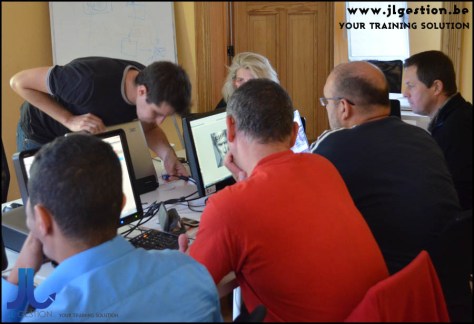



 Training-brussels - business training center in Brussels