In this Ajax training course, students learn to make calls to the server with JavaScript and to manipulate XML content returned from the server. Ajax opens the door to creating sophisticated web-based applications with much more of the logic (and therefore code) is handled on the client.
Class goals :
Learn how Ajax works.
Learn to write cross-browser Ajax code.
Learn to use Ajax to make a call to the server without a page refresh.
Learn to modify content blocks on a page without refreshing the whole page.
Learn to use server-side form validation with Ajax.
Learn to move elements around the page with Dynamic HTML.
Learn to show and hide elements.
Learn to manipulate XML documents with JavaScript using the DOM.
Learn to manipulate XML documents with JavaScript using XSLT.
Learn to program in JavaScript using Object-Oriented techniques.
Learn to work with various JavaScript/Ajax libraries, such as Prototype, Scriptaculous, and Sarissa.
Content of Training Ajax with PHP
Class Outline
Ajax Basics
The Purpose of Ajax
Traditional Web Application
An Ajax Web Application
The XMLHttpRequest Object
Creating an XMLHttpRequest Object
Using an XMLHttpRequest Object
Handling the Response
Conclusion
Ajax Frameworks
The Purpose of Frameworks
Choosing a Framework
Dojo
Downloading Dojo
Using Dojo for Ajax
Prototype
Downloading Prototype
Using Prototype for Ajax
Other Popular Frameworks
Direct Web Remoting (DWR)
AjaxAnywhere
Simple Ajax (SAJAX)
Sarissa
Other Frameworks
Conclusion
The HTML Document Object Model
Accessing Nodes
Accessing Element Nodes
Accessing Attribute Nodes
getAttribute
attributes[]
Accessing Nodes by Type, Name or Value
Accessing Nodes by Class Name
Removing Nodes from the DOM
DOM Differences: The Whitespace Problem
Creating New Nodes
Conclusion
XML and Ajax
Creating a DOM Document with JavaScript
Accessing, Creating and Modifying XML Nodes
Creating an AddChild() Function
Receiving XML Responses
Conclusion
Ajax Applications
Login Form
Quick Lookup Form
Preloaded Data
Ajax Slideshow
Navigable Tables
Conclusion
OO JavaScript and Refactoring Ajax
Illustrating the Problem
Object-Oriented JavaScript
JavaScript Classes
Prototypes
Extending Built-in Objects
Refactoring the Ajax Request Code
Conclusion
JavaScript Object Notation (JSON)
Object Literals
Arrays
Objects
Arrays in Objects
Objects in Arrays
JSON
JSON Syntax
JSON Parsers
PHP JSON Extension (added in PHP 5.2)
PEAR JSON
ZEND JSON
JSON Advantages and Disadvantages
Conclusion
XSLT Transformations with JavaScript
XSLT
Basic XSLT
XSLT in the Browser
XSLT in Internet Explorer
XSLT in Mozilla
Sarissa
Advantages and Disadvantages of XSLT in Ajax Applications
Conclusion
Drag and Drop
Drag and Drop Basics
script.aculo.us
Draggables
Droppables
A More Interesting Example
Conclusion
More Ajax Applications
Inline Editing
Detailed Information on Demand
Autologout
Autocompletion
Conclusion
Training Ajax with PHP
Onze voordelen :
Type of training: Inter-company, intra-company and individual
100% flexible & personalised training : You choose the place, the dates and the training program
Offer request : Response within 24 hours
50% discount for SME’s from Brussels-Capital Region
Free parking, lunch & drinks
Free use of our Digital Competence Centre: Manuals, courses, exercises, …
This hands on Perl programming course provides a thorough introduction to the Perl programming language, teaching attendees how to develop and maintain portable scripts useful for system management, data manipulation, and Web CGI programming.
Class goals :
Extensive hands on exercises provide practice in report creation, pattern matching, string manipulation, file I/O, command line processing, and debugging. Students are shown how to extend Perl’s basic functionality with packages and loadable modules. The final day encompasses CGI scripting with Perl as well as database access using the DBI module. Attendees are shown how to validate form data, how to perform robust database access, and how to generate HTML output in order to create a dynamic web site.
Content of Perl Programming and CGI Scripting
Perl Fundamentals
Running Perl on UNIX and Windows
Using Scalar Variables
Using Arrays
Operators, Expressions and Precedence
Arithmetic and String Operators
Relational and Logical Operators
Using the Conditional Operator
Understanding File Test Functions
Conditional Constructs
Looping Constructs
Using Subroutines
Global vs. Local Variables and Scoping
Debugger Concepts
Using Perl Script Arguments
Using Regular Expressions
Reading and Writing Files
Understanding Scope
Understanding Modules
Writing to Files and Using Multiple Named Formats
The Common Gateway Interface
Configuring a Web Server for CGI
The Apache httpd.conf File
Aliasing CGI-Enabled Directories in Apache
Relationship Between HTML and CGI
The CGI Output Stream
Specifying MIME Types
Printing Dynamic Content
Working with Form Data
Using the Perl CGI.pm Module
Creating Forms with CGI.pm
Form Processing with CGI.pm
Setting Cookies
Using Relational Databases with Perl CGI
Connecting to a Database
Procedural and Object Oriented Programming
Training Perl Programming and CGI Scripting
Onze voordelen :
Type of training: Inter-company, intra-company and individual
100% flexible & personalised training : You choose the place, the dates and the training program
Offer request : Response within 24 hours
50% discount for SME’s from Brussels-Capital Region
Free parking, lunch & drinks
Free use of our Digital Competence Centre: Manuals, courses, exercises, …
This hands on Perl programming course provides a thorough introduction to the Perl programming language, teaching attendees how to develop and maintain portable scripts useful for system management, data manipulation, and Web CGI programming.
This 3 day advanced ActionScript course is for people who want to push their Actionscript 3 skills further and learn advanced techniques in order to create and control effects with MovieClips, bitmaps, colour, audio, video, and 3D assets.
Class goals :
Additionally you we will cover some great open source class libraries that will help you in creating your effects and flash sites, and generally learn to take your ActionScript 3 skills to the next level.
Content of Adobe ActionScript 3 Advanced Techniques
Drawing
Drawing API
Triangles (and UVT)
Bitmap fills
3D transformations
rotationX/Y/Z transformations
scaleX/Y/Z transformations
x/y/z translations
Simple 3D drawing
Collision Detection
Hit tests
Using Bitmaps for detection
Tweening
Tween class
Applying tweens
Creating effects with tweens
Other tweening libraries
Transitions and the Transition Manager
Blinds
Fade
Fly
Iris
Squeeze
Wipe
Others
Colour
Manipulating colours with AS3
ColorTransform class
Transformations
Matrix class
Matrix3D class
Transform
Others
Video Effects
Bitmaps
Cameras
Movies
Sound effects
Loading sounds
Controlling sounds
Visualisation – waveforms and frequencies
Microphones
Image Effects
Bitmaps and BitmapData
Filters and Blend modes
PerlinNoise
Open source Classes
Papervision3D
Tweener
TweenMax
Minimal Components
Others
Open source frameworks
Gaia
Augmented Reality
FLARToolkit
Adding Papervision3D
Object Orientated Programming
Creating your own class
Creating methods
Creating getters/setters
Using your custom class
Creating Document classes
Flash and Flash Builder (Flex Builder)
Importing Flash work into Flash Builder
Setting up your classes in Flash Builder
Embedding Flash work as assets in your classes
Using Flash Builder with php and mysql
Components and Data
Components
Button
Checkbox
ColourPicker
Combobox
Datagrid
etc
Working with data
Database Integration
Setting up a server and database
Testing server/flash/db integration
Ways to connect Flash and data – AMFPHP
XML
DataProvider
Training Adobe ActionScript 3 Advanced Techniques
Onze voordelen :
Type of training: Inter-company, intra-company and individual
100% flexible & personalised training : You choose the place, the dates and the training program
Offer request : Response within 24 hours
50% discount for SME’s from Brussels-Capital Region
Free parking, lunch & drinks
Free use of our Digital Competence Centre: Manuals, courses, exercises, …
Until now, you have used Crystal Reports to build and modify reports. You want to use the advanced functionality of Crystal Reports to generate reports in the format you desire. In this course, you will create complex reports and data sources using Crystal Reports’ tools. You will not only create more sophisticated reports including subreports and cross-tabs, but you will also increase the speed and efficiency of your reports by using SQL queries.
Class goals :
After completing this course, students should be able to:
Create automatic and manual running totals
Work with cross-tab reports
Add subreports
Create drill-downs in a report
Use SQL statements in report processing
Create complex formulas
Add charts to reports
Enhance report functionality
Content of
Lesson 1: Creating Running Totals
Lesson 2: Working with Cross-Tabs
Lesson 3: Adding Subreports
Lesson 4: Creating Drill-Downs in a Report
Lesson 5: Using SQL Statements in Report Processing
Lesson 6: Creating Complex Formulas
Lesson 7: Adding Charts to Reports
Lesson 8: Enhancing Report Functionality
Appendix A: Managing Reports
Appendix B: Processing Data on the Server
Appendix C: Detecting and Fixing Problems
Training Crystal Reports 2008 Level 2
Onze voordelen :
Type of training: Inter-company, intra-company and individual
100% flexible & personalised training : You choose the place, the dates and the training program
Offer request : Response within 24 hours
50% discount for SME’s from Brussels-Capital Region
Free parking, lunch & drinks
Free use of our Digital Competence Centre: Manuals, courses, exercises, …
Organisations use reporting tools to access data sources and generate customised reports. Crystal Reports 2008 enhances report building and report processing techniques with a slew of features that add value to your presentation. In this course, you will create a basic report by connecting to a database and modifying its presentation.
Class goals :
After completing this course, students should be able to:
Explore the Crystal Reports interface
Create a basic report and modify it
Use formulas for filtering data
Build a parameterized report
Group report data
Enhance a report
Create a report using data sourced from an Excel database
Distribute data
Content of Crystal Reports 2008 Level 1
Lesson 1: Exploring the Crystal Reports 2008 Interface
Lesson 2: Working with Reports
Lesson 3: Using Formulas in Reports
Lesson 4: Building Parameterized Reports
Lesson 5: Grouping Report Data
Lesson 6: Enhancing a Report
Lesson 7: Creating a Report from Excel Data
Lesson 8: Distributing Data
Appendix A: Up and Configuring Data Sources
Appendix B: Using Report Processing Techniques
Appendix C: Using Functions in Formulas
Training Crystal Reports 2008 Level 1
Onze voordelen :
Type of training: Inter-company, intra-company and individual
100% flexible & personalised training : You choose the place, the dates and the training program
Offer request : Response within 24 hours
50% discount for SME’s from Brussels-Capital Region
Free parking, lunch & drinks
Free use of our Digital Competence Centre: Manuals, courses, exercises, …
Now that you have completed the first course, or are familiar with the basics of building and modifying reports, you’re ready to move ahead to create complex reports and data sources using Crystal Reports’ tools. In this course, you’ll not only learn how to create more sophisticated reports including subreports and cross-tabs, but you’ll also learn how to increase the speed and efficiency of your reports by using SQL queries.
Class goals :
After completing this course, students should be able to:
Create running totals in a report
Build cross-tabs in your report
Add subreports to a report
Design a report that uses a drill-down
Improve processing speed in your reports
Chart single and multiple data series
Report from Excel data
Implement report prompts
Enhance report functionality
Content of Crystal Reports Version 11 Advanced
Creating Running Totals
Create a Running Total Field
Modify a Running Total Field
Create a Manual Running Total on Detail Data
Create a Manual Running Total on Summary Data
Building Cross-tabs in Your Report
Create a Cross-tab
Create a Specified Group Order
Filter a Cross-tab by Group
Change the Cross-tab Format
Conditionally Format Rows and Columns
Keep Groups Together
Adding Subreports
Insert a Subreport
Link a Subreport to a Primary Report
Edit a Subreport’s Structure
Format a Subreport Using the Format Editor
Share Variables Between Subreports and Primary Reports
Create an On-demand Subreport
Creating Drill-downs
Create a Drill-down
Create Separate Headings for Drill-down Data
Enhancing Report Processing by Writing SQL Statements
Create a Report Using SQL Queries
Summarize Report Data Using SQL Aggregate Functions
Create Joins Using SQL
Create Subqueries
Create a SQL Expression Field
Charting Data
Create a Bar Chart
Modify a Chart
Format a Chart
Create a Chart Template
Create a Top N Chart
Create a Cross-tab Chart
Reporting on Excel Data with Crystal Reports
Create a Report Based on Excel Data
Modify a Report Generated from Excel Data
Update Data in a Report Based on Excel Data
Working with Prompts
Create a Static Prompt
Create a Dynamic Prompt
Enhancing Report Functionality
Group Data Hierarchically
Create a Dynamic Image
Create a Report Alert
Create a Geographic Map
Training Crystal Reports Version 11 Advanced
Onze voordelen :
Type of training: Inter-company, intra-company and individual
100% flexible & personalised training : You choose the place, the dates and the training program
Offer request : Response within 24 hours
50% discount for SME’s from Brussels-Capital Region
Free parking, lunch & drinks
Free use of our Digital Competence Centre: Manuals, courses, exercises, …
Crystal Reports 11 Level 1 is the first course in the Crystal Reports 11 series. In this course, you will build basic list and group reports that work with almost any database.
Class goals :
After completing this course, students should be able to:
Create a list report by using data from an existing database
Locate and present data in a specified order
Create groups to summarize report data
Build formulas to add non-database data to a report and display data differently
Format reports
Enhance reports by adding and modifying elements in a report
Create single data series charts
Distribute report data to other users
Content of Crystal Reports Version 11 Introduction
Creating a Report
Set Default Report Settings
Specify Fields for a New Report
Preview the Report
Modify Field Display
Add a Report Title
Position Fields
Add Fields from Additional Tables
Displaying Specific Report Data
Find Data
Sort Data
Filter Data by Single Criterion
Grouping Report Data
Insert a Group
Add Summaries
Format Summary Information
Change Group Options
Add an Additional Group
Filter by Group
Create a Top N Sort Group
Building Formulas
Write a Formula
Create a Formula
Edit a Formula
Combine Fields by Formula
Delete a Formula
Filter Data by Multiple Criteria
Modify a Filter Using an OR Operator
Create a Parameter Field
Account for Null Fields in a Formula
Formatting Reports
Remove White Space
Insert Page Header/Footer Data
Add Borders, Boxes, and Lines
Change Field Background Color
Change the Margins
Enhancing Reports
Add a Watermark
Insert Objects Using Object Linking and Embedding
Modify Formatting Based on Data Value
Suppress Report Sections
Insert Hyperlinks
Hide Blank Report Sections
Creating and Modifying Pie Charts
Create a Pie Chart with a Drill-down
Modify Chart Text
Format a Chart
Present a Chart by Group
Distributing Data
Export to PDF
Export to Microsoft Excel File
Export to an Microsoft Access Database File
Create a Report Definition
Create Mailing Labels
Training Crystal Reports Version 11 Introduction
Onze voordelen :
Type of training: Inter-company, intra-company and individual
100% flexible & personalised training : You choose the place, the dates and the training program
Offer request : Response within 24 hours
50% discount for SME’s from Brussels-Capital Region
Free parking, lunch & drinks
Free use of our Digital Competence Centre: Manuals, courses, exercises, …
This is a course that covers SQL for querying and modifying databases, as well as database transaction processing, creation and dropping of tables and databases and tables. The aim is to provide a sound foundation of SQL, both in general, and in the context of PostgreSQL.
The course is a hands on course and the emphasis is on creating SQL scripts textually, rather than through a GUI.
Class goals :
This is a course that covers SQL for querying and modifying databases, as well as database transaction processing, creation and dropping of tables and databases and tables. The aim is to provide a sound foundation of SQL, both in general, and in the context of PostgreSQL.
The course is a hands on course and the emphasis is on creating SQL scripts textually, rather than through a GUI.
Content of Foundations of SQL for PostgreSQL
Introduction to Database Concepts
overview of relational database and the client – server model
database concepts – tables, rows and columns, primary keys and foreign keys
database data types
Introduction to SQL
creating and running SQL scripts
overview of SQL syntax
guidelines for writing readable and maintainable SQL
Retrieving data – SELECT, WHERE and ORDER
Overview of the SELECT statement and its clauses
specifying source table(s) – using the FROM clause
specifying which columns in a table ( or the entire table ) are to be retrieved
result sets
Renaming columns using aliases
Sorting the query results using ORDER BY
Filter Results using the WHERE clause
logical expressions using numeric and string comparison Operators
basic numeric and string based filtering
filtering based on results of calculations
duplicate removal – using DISTINCT
combining and extending logical expressions using AND , OR and NOT
specifing ranges – BETWEEN and IN
handling NULL values
basic pattern matching – LIKE
Using UNION, INTERSECT and EXCEPT to join SELECT Results
Site administrators perform an important function of managing the Moodle™ site on a day-to-day basis. They often have exclusive access to settings and options that can impact dramatically on the experience of participants within courses and the degree to which the Moodle™ site aligns with the wider objectives of the organisation.
Class goals :
On this Moodle™ training course, delegates will learn how to:
Adapt the layout of a Moodle™ site
Identify global settings that impact on security, privacy and access
Identify and manage options and settings that impact on course design and the experience for participants
Make changes to the appearance of the site using options within the Moodle™ administration console
Manually create and manage accounts Identify, assign, modify, create and manage roles
Content of Moodle™ Administrator Course
Site layout options
Site / Course back up
Global privacy and access settings
Using in built options to modify the site appearance
Customising the interface terminology
Settings and options that impact on the experience of participants in courses
Creating and managing user accounts with manual and email authentication
The roles system
Monitoring user activity
Training Moodle™ Administrator Course
Onze voordelen :
Type of training: Inter-company, intra-company and individual
100% flexible & personalised training : You choose the place, the dates and the training program
Offer request : Response within 24 hours
50% discount for SME’s from Brussels-Capital Region
Free parking, lunch & drinks
Free use of our Digital Competence Centre: Manuals, courses, exercises, …




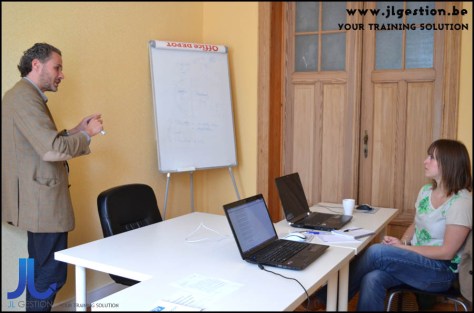




 Training-brussels - business training center in Brussels