Category Archives: Training Development

Training Flex 3 / Intermediate – 2 days

Class overview :

In this intermediate Adobe Flex training class, students will build upon their Adobe Flex skills and learn to work with data sets, custom events and components, DataGrids and drag and drop controls.

Class goals :

Learn to work with data sets
Learn to declare and use custom events
Learn to create custom components with ActionScript 3.0
Learn to use DataGrids and ItemRenderers
Learn to use drag and drop

Content of Training Flex 3 / Intermediate

Class Outline

  1. Using Controls and Repeaters with Datasets
    1. Using Datasets
    2. Displaying the Categories Using a HorizontalList and an itemRenderer
    3. Displaying Grocery Products Based on Category Selection
    4. Coding States to Display Detailed Product Information
    5. Placing Products in the Shopping Cart
  2. Using Custom Events
    1. Understanding the Benefits of Loosely Coupled Architecture
    2. Dispatching Events
    3. Declaring Events for a Component
    4. Identifying the Need for Custom Event Classes
    5. Building and Using the CategoryEvent
    6. Creating and Using the ProductEvent Class
    7. Understanding Event Flow and Event Bubbling
  3. Creating Custom Components with ActionScript 3.0
    1. Introducing Building a Component with ActionScript 3.0
    2. Creating the Structure of the Class
    3. Overriding the createChildren() Method
    4. Sizing and Positioning in Flex 3
    5. Understanding the measure() Method
    6. Overriding the updateDisplayList() Method
  4. Using DataGrids and Item Renderers
    1. Introducing DataGrids and Item Renderers
    2. Adding a Generic DataGrid to ChartPod
    3. Adding HTTPService Calls to Dashboard
    4. Displaying the Shopping Cart with a DataGrid
    5. Using the AdvancedDataGrid
    6. What You Have Learned
  5. Using Drag and Drop
    1. Introducing the Drag and Drop Manager
    2. Dragging and Dropping Between Two DataGrids
    3. Dragging and Dropping Between a DataGrid and a List
    4. Using a Nondrag-Enabled Component in a Drag-and-Drop Operation
    5. Dragging a Grocery Item to the Shopping Cart
    6. What You Have Learned
Flex 3 / Intermediate
Training Flex 3 / Intermediate

Onze voordelen :

  • Type of training: Inter-company, intra-company and individual
  • 100% flexible & personalised training : You choose the place, the dates and the training program
  • Offer request : Response within 24 hours
  • 50% discount for SME’s from Brussels-Capital Region
  • Free parking, lunch & drinks
  • Free use of our Digital Competence Centre: Manuals, courses, exercises, …
Training Flex 4 / Comprehensive Introduction – 5 days

Class overview :

This Flex 4 training class introduces students to creating Rich Internet Applications (RIAs) with Flex 4 and Flash Builder (formerly called Flex Builder). By the end of class, you’ll be able to build a well-organized and sophisticated Flex 4 application following best practices. The Flex 4 application you will build in class will be driven by external data. The user interface will display the data using navigators, advanced event handling, drag and drop functionality, custom ActionScript classes, custom components and customized datagrids.

Class goals :

Learn to build Rich Internet Applications using Flex 4.
Learn to use Flex 4 controls and handle user (and other) events..
Learn to access and manipulate remote XML Data with Flex 4.
Learn to create Classes and instantiate Objects.
Learn to use data binding with Flex 4.
Learn to use DataGroups and Lists.
Learn to create and dispatch Events.
Learn to use DataGrids and Item Renderers.
Learn to create Drag and Drop applications with Flex 4.
Learn to build Navigation menus with Flex 4.
Learn to use Formatters and Validators.
Learn to customize a Flex 4 Application with Styles and Skins.
Learn to create custom ActionScript components.

Content of Training Flex 4 / Comprehensive Introduction

Class Outline

  1. Understanding Rich Internet Applications
    1. The Evolution of Computer Applications
    2. The Break from Page-Based Architecture
    3. The Advantages of Rich Internet Applications
    4. RIA Technologies
  2. Getting Started with Flex Application Development
    1. Creating a Project and an MXML Application
    2. Understanding the Flash Builder Workbench
    3. Running Your Application
    4. Exploring the Flash Builder Debugger
    5. Getting Ready for the Next Lessons
  3. Laying Out the Interface
    1. Learning About Layouts
    2. Laying Out the E-Commerce Application
    3. Working with Constraint-Based Layouts
    4. Working with View States
    5. Refactoring
  4. Using Simple Controls
    1. Introducing Simple Controls
    2. Displaying Images
    3. Building a Detail View
    4. Using Data Binding to Link a Data Structure to a Simple Control
    5. Using a Form Layout Container to Lay Out Simple Controls
  5. Handling Events
    1. Understanding Event Handling
    2. Handling System Events
  6. Using Remote XML Data
    1. Using Embedded XML
    2. Using XML Loaded at Runtime
    3. Retrieving XML Data via HTTPService
    4. Searching XML with E4X
    5. Using Dynamic XML Data
    6. Using the XMLListCollection in a Flex Control
  7. Creating Classes
    1. Building a Custom ActionScript Class
    2. Building a Value Object
    3. Building a Method to Create an Object
    4. Building Shopping Cart Classes
    5. Manipulating Shopping Cart Data
  8. Using Data Binding and Collections
    1. Examining Data Binding
    2. Being the Compiler
    3. Understanding Bindable Implications
    4. Using ArrayCollections
    5. Refactoring ShoppingCartItem
  9. Breaking the Application into Components
    1. Introducing MXML Components
    2. Splitting Off the ShoppingView Component
    3. Breaking Out a ProductItem Component
    4. Creating Components to Manage Loading the Data
  10. Using DataGroups and Lists
    1. Using Lists
    2. Using DataGroups
    3. Virtualization with Lists
    4. Displaying Grocery Products Based on Category Selection
  11. Creating and Dispatching Events
    1. Understanding the Benefits of Loose Coupling
    2. Dispatching Events
    3. Declaring Events for a Component
    4. Identifying the Need for Custom Event Classes
    5. Building and Using the UserAcknowledgeEvent
    6. Understanding Event Flow and Event Bubbling
    7. Creating and Using the ProductEvent Class
  12. Using DataGrids and Item Renderers
    1. Spark and MX
    2. Introducing DataGrids and Item Renderers
    3. Displaying the ShoppingCart with a DataGrid
    4. Using the AdvancedDataGrid
  13. Using Drag and Drop
    1. Introducing the Drag and Drop Manager
    2. Dragging and Dropping Between Two DataGrids
    3. Dragging and Dropping Between a DataGrid and a List
    4. Using a Non-Drag-Enabled Component in a Drag-and-Drop Operation
    5. Dragging a Grocery Item to the Shopping Cart
  14. Implementing Navigation
    1. Introducing Navigation
    2. Creating the Checkout Process as a ViewStack
    3. Integrating CheckoutView into the Application
  15. Using Formatters and Validators
    1. Introducing Formatters and Validators
    2. Using Formatter Classes
    3. Examining Two-Way Bindings
    4. Using Validator Classes
  16. Customizing a Flex Application with Styles
    1. Applying a Design with Styles and Skins
    2. Cleaning Up the Appearance
    3. Applying Styles
    4. Changing CSS at Runtime
  17. Customizing a Flex Application with Skins
    1. Understanding the Role of Skins in a Spark Component
    2. The Relationship between Skins and States
    3. Creating a Skin for the Application
  18. Creating Custom ActionScript Components
    1. Introducing Components with ActionScript 3.0
    2. Building Components Can Be Complex
    3. Understanding Flex Components
    4. Why Make Components?
    5. Defining a Component
    6. Creating the Visuals
    7. Adding Functionality to the Component
    8. Creating a Renderer for the Skin
Flex 4 / Comprehensive Introduction
Training Flex 4 / Comprehensive Introduction

Onze voordelen :

  • Type of training: Inter-company, intra-company and individual
  • 100% flexible & personalised training : You choose the place, the dates and the training program
  • Offer request : Response within 24 hours
  • 50% discount for SME’s from Brussels-Capital Region
  • Free parking, lunch & drinks
  • Free use of our Digital Competence Centre: Manuals, courses, exercises, …
Training ColdFusion / Introduction – 2 days

Class overview :

This is an introductory ColdFusion class for Web designers who are brand new to ColdFusion 9. You will learn to process forms, manage sessions, write reusable code and create database-driven ColdFusion-based websites.

Class goals :

Learn to get data from a database and display it on the page
Learn to insert, Edit and Delete records from a database
Learn to pass data from one page and receive it on another using HTML Forms
Learn to create Dynamic Form Fields including Dynamic Select Lists
Learn to build a Search Interface
Learn to use Session Variables to provide Password Protection
Learn to call ColdFusion Components (CFCs) and Custom Tags

Content of Training ColdFusion / Introduction

Class Outline

  1. Introduction to ColdFusion
    1. Static pages vs. Dynamic pages
    2. Server-side Web Technologies
    3. Database Alphabet Soup: ODBC/JDBC, DSNs and SQL
    4. Course Objectives and Prerequisites
    5. Introduction to Course Project
  2. ColdFusion Basics
    1. Using CFML
      1. Code Editors
      2. Dreamweaver Interface
      3. Tag Updaters / Extensions
      4. Tag Editing Dialog Boxes
    2. Embedded Tag Help
    3. Using ColdFusion Comments
    4. Creating Variables
      1. <cfset> and <cfoutput>
    5. Variable Scope/Prefixes
    6. Built-in ColdFusion Functions
      1. CF Function Reference (Dreamweaver specific)
      2. Online Reference (http://livedocs.adobe.com)
      3. Tip: (http://cfquickdocs.com)
    7. Using <cfinclude> to reuse code
  3. Dynamic Data: Querying the Database
    1. Database Basics
      1. Introduction to SQL
      2. Select Statement
      3. Update Statement
      4. Insert Statement
      5. Delete Statement
      6. Data Source Name (DSN) / Remote Development Server (RDS)
      7. The DSN Used in This Class: movieList
    2. Course Project Database
    3. Querying the database with <cfquery>
      1. <cfdump> for Quick Output
    4. Customizing Display with <cfoutput>
      1. Building Dynamic Tables
      2. Shortcut: <cftable>
      3. Shortcut: Dynamic Table Tool (in Dreamweaver)
  4. Creating a Drill-down Interface
    1. Passing Variables between Pages
      1. « Two-page method »
    2. Receive Variables through the URL
      1. Using a WHERE clause in a SQL Statement
      2. Protecting Against SQL Injection Attacks with <cfqueryparam>
  5. Conditional Statements and Forms
    1. Conditional Statements
      1. <cfif>, <cfelseif> and <cfelse>
      2. Comparison Operators
      3. Operator
      4. Description
      5. Using the isDefined() function
    2. HTML Form Review
    3. Self-Submitting Forms
      1. Using the <cfparam> tag to set a default value
      2. Quick Examination of a ColdFusion Framework (Methodology): Fusebox
    4. Dynamically Populating Select Lists
      1. HTML Review: <select> tags
      2. Introducing the <cfform> Tag
      3. Shortcut: <cfselect>
  6. Quick Introduction to RSS and Ajax with <cfform>
    1. Reading an RSS Feed
    2. Introducing the <cfform> Tag
    3. Building a Mask with <cfform>
    4. Automatically Build a Dynamic Select List with <cfselect>
  7. Search Interface
    1. Creating a Search Interface
      1. Using % and _ in a LIKE Statement
  8. Insert Records into the Database
    1. Inserting Records
      1. SQL Insert Statement
      2. Insert Record Step 2 – the Insert
      3. Shortcut: <cfinsert>
      4. Redirect Users with <cflocation>
    2. Automated Form Validation
      1. Client-side vs. Server-side validation: When does the validation code run?
  9. Edit (Update) Database Records
    1. Updating records
      1. SQL UPDATE Statement Review
      2. Passing the Primary Key
      3. Page 2 – View Current Data in a Form
      4. Page 3 – Perform the Update to the Database
      5. Shortcut: <cfupdate>
    2. Deleting Records
      1. Note on Deleting records
      2. Review of the SQL Delete Statement
      3. « Deleting » without deleting
      4. No <cfdelete>!
  10. Reusing Code
    1. Reusing code with <cfinclude> and <cflocation>
    2. Custom Tags
      1. Where to store Custom Tags
      2. CALLER and ATTRIBUTE scopes
      3. Using <cfmodule>
      4. A Note about CFX tags
    3. User Defined Functions (UDFs) and ColdFusion Components (CFCs)
      1. Creating UDFs with the <cffunction> tag
      2. Using ColdFusion Components (CFCs)
    4. Creating Components
      1. Calling or Invoking Components
      2. Passing Arguments to Components
      3. The Component Code
      4. The main CFML page
      5. View a Component directly in the browser
  11. Using Session Variables for Password Protection
    1. Session Variables
      1. Using Application.cfc to Enable Session Management
      2. Creating Password Protected Pages
      3. Password-protect.cfm (the included page)
      4. Application.cfm
      5. Locking Session and Application variables with <cflock>
  12. Tracking User Information with Cookies (optional)
    1. Using Cookies to Track Users
  13. Sending email with <cfmail> (optional)
    1. Using ColdFusion to Send Email
      1. <cfmail> Tag Syntax
ColdFusion / Introduction
Training ColdFusion / Introduction

Onze voordelen :

  • Type of training: Inter-company, intra-company and individual
  • 100% flexible & personalised training : You choose the place, the dates and the training program
  • Offer request : Response within 24 hours
  • 50% discount for SME’s from Brussels-Capital Region
  • Free parking, lunch & drinks
  • Free use of our Digital Competence Centre: Manuals, courses, exercises, …

Training Object-Oriented ActionScript – 2 days

Class overview :

In this hands-on ActionScript training class you will learn how to develop reusable Flash based applications using ActionScript 3.0 and an object-oriented approach. This course is also suitable if you wish to use ActionScript 3.0 to create components for Flex-based development.

Class goals :

Learn ActionScript 3.0 syntax.
Understand core concepts of Object-Oriented Programming (including Inheritance, Encapsulation, Polymorphism).
Apply best practices for developing reusable applications.
Get a thorough understanding of the Flash/Flex workflow.
Understand how to best structure your code using frameworks.
Get introduced to a number of design patterns in ActionScript 3.0.
Build and deploy real-world, scalable web applications.

Content of Training Object-Oriented ActionScript

Class Outline

  1. Introducing ActionScript 3.0
    1. What is ActionScript?
    2. Learning ActionScript 3.0 syntax
    3. New features in ActionScript 3.0
    4. Classes and objects
    5. Methods and properties
    6. Scope and access modifiers
  2. Concepts of Object-Oriented Programming
    1. Inheritance
    2. Encapsulation
    3. Polymorphism
    4. Interfaces
  3. Developer workflow and best practices
    1. Document class
    2. SWC compilation
    3. Flash/Flex integration
  4. Design Patterns
    1. What are Design Patterns?
    2. Implementing Design Patterns
    3. Observer
    4. Singleton
    5. Command
    6. Model-View-Controller
  5. Best Practices and bringing it all together
    1. Working in teams Source and version control
    2. Frameworks
Object-Oriented ActionScript
Training Object-Oriented ActionScript

Onze voordelen :

  • Type of training: Inter-company, intra-company and individual
  • 100% flexible & personalised training : You choose the place, the dates and the training program
  • Offer request : Response within 24 hours
  • 50% discount for SME’s from Brussels-Capital Region
  • Free parking, lunch & drinks
  • Free use of our Digital Competence Centre: Manuals, courses, exercises, …

Training Ajax – 3 days

Class overview :

This is a server-side agnostic Ajax training class. Examples in the provided course manual are in JSP, and there are equivalent examples in the class files in PHP, ColdFusion, and Classic ASP. The focus is on the client-side aspects of Ajax (i.e., JavaScript), so, while it’s helpful to understand the server side, it’s not required or assumed.

Class goals :

Learn how Ajax and the XMLHttpRequest object work.
Learn to write cross-browser Ajax code.
Learn to use Ajax to make a call to the server without a page refresh.
Learn to modify content blocks on a page without refreshing the whole page.
Learn to use server-side form validation with Ajax.
Learn to pull down content from the server to dynamically display more content.
Learn to manipulate XML documents with JavaScript using the DOM.
Learn to manipulate XML documents with JavaScript using XSLT.
Learn to work with various JavaScript/Ajax libraries, such as Prototype, Dojo, and Scriptaculous.

Content of Training Ajax

Class Outline

  1. Ajax Basics
    1. The Purpose of Ajax
      1. Traditional Web Application
      2. An Ajax Web Application
    2. The XMLHttpRequest Object
      1. Using an XMLHttpRequest Object
      2. Handling the Response
    3. The Callback Function
  2. Passing Data
    1. XML
      1. Creating an addChild() Function
    2. Dynamic Tables
    3. JSON
    4. Review of Object Literals
      1. Arrays
      2. Objects
      3. Arrays in Objects
      4. Objects in Arrays
    5. Back to JSON
      1. JSON Syntax
      2. JSON Parsers
    6. JSON Advantages and Disadvantages
  3. Ajax Applications
    1. Login Form
    2. Quick Lookup Form
    3. Preloaded Data
      1. Ajax Slideshow
      2. Navigable Tables
  4. XSLT Transformations with JavaScript
    1. XSLT
      1. Basic XSLT
    2. XSLT in the Browser
      1. The Mozilla Method
      2. The IE Method
    3. Advantages and Disadvantages of XSLT in Ajax Applications
  5. Ajax/JavaScript Frameworks
    1. The Purpose of Frameworks
      1. Choosing a Framework
    2. Dojo
      1. Downloading Dojo
      2. Using Dojo for Ajax
    3. Prototype
      1. Downloading Prototype
      2. Using Prototype for Ajax
    4. Other Popular Frameworks
      1. Other Frameworks
  6. More Ajax Applications
    1. Inline Editing
      1. The contenteditable Attribute
    2. Detailed Information on Demand
    3. Autologout
    4. Autocompletion
Ajax
Training Ajax

Onze voordelen :

  • Type of training: Inter-company, intra-company and individual
  • 100% flexible & personalised training : You choose the place, the dates and the training program
  • Offer request : Response within 24 hours
  • 50% discount for SME’s from Brussels-Capital Region
  • Free parking, lunch & drinks
  • Free use of our Digital Competence Centre: Manuals, courses, exercises, …

Training Database with Visual Studio 2010 – 3 days

Class overview :

This three-day, instructor-led course provides students with the knowledge and skills to properly manage the SQL Server 2005/2008 database development lifecycle in an Agile environment. The student will learn how to manage changes to the database schema, ensuring quality through T-SQL unit testing, and how to automate the building and deploying of SQL Server databases.

Class goals :

Understand the database development capabilities of Visual Studio 2010
Understand the areas of integration with Team Foundation Server
Understand how the tools support an Agile database development lifecycle
Create and configure database projects and server projects
Compare schemas and data for differences from two SQL Server instances
Generate scripts to reconcile differences in schemas and data
Understand and create effective T-SQL unit tests
Understand and use database refactoring correctly
Use MSBuild and Team Build to manage build and deployment
Extend Visual Studio by creating your own database refactoring method, test data generator, unit test condition, and static code analysis rule

Content of Training Database with Visual Studio 2010

Class Outline

  1. Agile Database Development
    1. Agile database development
    2. Agile database techniques
    3. Visual Studio 2010 Premium Edition
    4. Case study
    5. Resources
    6. Lab Exercises
      1. Meet the AdventureWorks team
      2. Review the environment
      3. Deploy the database
  2. Database Projects
    1. Architecture of a database project
    2. Creating and managing database projects
    3. Visual Studio 2010 integration
    4. Importing database schema
    5. Importing SQL scripts
    6. Permissions
    7. Lab Exercises
      1. Explore Visual Studio integration
      2. Create a new database project
      3. Modify the database project
      4. Import a database schema
      5. Import a SQL script
  3. Change Management
    1. Introduction to Team Foundation Server
    2. Working with Team Projects
    3. Process templates and work items
    4. Using Team Foundation Version Control
    5. Placing database projects under version control
    6. Detecting and reconciling database schema differences
    7. Detecting and reconciling table data differences
    8. Lab Exercises
      1. Create a Team Project and work items
      2. Configure Team Foundation Version Control
      3. Place a database project under version control
      4. Explore and Visual Studio 2010 version control features
      5. Compare schemas for differences from two SQL Server instances
      6. Compare data for differences from two SQL Server tables
      7. Generate scripts to reconcile differences in schemas and data
      8. Explore the MSSCCI provider from SQL Server Management Studio (optional)
  4. Unit Testing
    1. Reasons to unit test your database code
    2. How to create database unit tests manually
    3. How to create database unit tests automatically
    4. Assertions vs. conditions
    5. Executing unit tests
    6. Managing and publishing test results
    7. Static code analysis
    8. Lab Exercises
      1. Create and execute database unit tests
      2. Use pre-test and post-test actions
      3. Use an ordered list to run tests
      4. Export and import test results
      5. Create unit tests automatically from the Schema View window
      6. Run static code analysis
  5. Refactoring
    1. Introduction to refactoring
    2. Refactoring support in Visual Studio 2010
    3. Database refactoring methods
    4. Rename refactoring methods
    5. Move refactoring method
    6. Fully-qualify refactoring method
    7. Expand-wildcard refactoring method
    8. Resources
    9. Lab Exercises
      1. Approaches to renaming database objects
      2. Use the rename refactor method
      3. Preview changes
      4. Undo refactoring using global undo
      5. Review the refactoring log
  6. Data Generation
    1. Issues with test data and some potential solutions
    2. Data generation plans
    3. Data generators
    4. Regular expression generator
    5. Data bound generator
    6. Creating and running a data generation plan
    7. Automatically generating data prior to running unit tests
    8. Lab Exercises
      1. Create a data generation plan
      2. Use the Regular Expression data generator
      3. Use the Data Bound generator
      4. Configure generation for related table and set ratios
      5. Generate data automatically prior to running unit tests
  7. Build and Deploy
    1. The need for automated build and deployment
    2. Building database projects
    3. Deploying schema changes
    4. The VSDBCMD.exe command line utility
    5. Integration with MSBuild
    6. Integration with Team Foundation Build
    7. Lab Exercises
      1. Build the database project
      2. Deploy database schema changes
      3. Use custom deployment scripts
      4. Automate using MSBuild and Team Foundation Build
  8. Extensibility
    1. Visual Studio 2010 Areas of extensibility
    2. Visual Studio database project and item templates
    3. Custom database refactoring methods
    4. Custom static code analysis rules
    5. Custom test data generators
    6. Custom unit test conditions
    7. Custom check-in policies
    8. Lab Exercises
      1. Customize database object templates
      2. Create a custom data generator
      3. Create a custom unit test condition
      4. Create a custom code analysis rule (optional)
      5. Create a custom refactoring method (optional)
      6. Create and debug a custom check-in policy (optional)
Database with Visual Studio 2010
Training Database with Visual Studio 2010

Onze voordelen :

  • Type of training: Inter-company, intra-company and individual
  • 100% flexible & personalised training : You choose the place, the dates and the training program
  • Offer request : Response within 24 hours
  • 50% discount for SME’s from Brussels-Capital Region
  • Free parking, lunch & drinks
  • Free use of our Digital Competence Centre: Manuals, courses, exercises, …
Training TFS 2010 / Advanced – 2 days

Class overview :

This two-day, instructor-led Team Server training class dives deep into the areas of process template customization, version control, parallel development and Team Foundation Build. It provides students with the knowledge and skills to effectively customize process templates, understand the advanced usage of the version control and check-in policies in a parallel development environment, and how to customize and leverage Team Foundation Build.

Class goals :

Understand the architecture of a process template and modify an existing process template
Use global lists to share selection data between fields and team projects
Understand parallel development
Understand Team Foundation Server’s support for parallel development
Use branching, merging, shelving, and unshelving effectively
Visualize branch hierarchies and changeset merges
Use the TF command line utility and the TF Rollback command
Install and use the MSSCCI provider
Understand Team Foundation Build controller and agent architecture

Content of Training TFS 2010 / Advanced

Class Outline

  1. Customizing Process Templates
    1. Customizing vs. extending
    2. Process template architecture
    3. Modifying a process template
    4. Work item type schema
    5. Customizing work item types
    6. Configuring work item states and transitions (workflow)
    7. Using global lists
    8. Lab Exercises
      1. Create a team project for managing TFS customization
      2. Download and explore a process template
      3. Modify the process template
      4. Upload and test a process template
      5. Create a new process template
      6. Implement a global list
      7. Alter work item types for an existing team project
      8. Use the Team Foundation Power Tools Process Editor
  2. Parallel Development
    1. Introduction to parallel development
    2. Branching, promotion and locking models
    3. Branch, merge, shelve and unshelve operations
    4. Conflict detection and resolution
    5. Securing version control folders and files
    6. The TF.exe command line utility
    7. Team Foundation Server Power Tools
    8. Alternate compare and merge tools
    9. The MSSCCI provider
    10. Lab Exercises
      1. Create version control folders, branches and workspaces
      2. Branch code, merge changes and visualize hierarchies
      3. Detect and resolve conflicts
      4. Perform a baseless merge using TF.exe
      5. Rollback changes using TF.exe
      6. Secure artifacts in version control
      7. Shelve and unshelve changes
      8. Install and use the MSSCCI provider (optional)
      9. Install and use an alternate merge tool (optional)
  3. Check-In Policies
    1. Ensuring changes are properly implemented
    2. Configuring check-in policies and notes
    3. Team Foundation Server Power Tools policy-pack
    4. Understanding policy failure, overriding and managing overrides
    5. Creating, deploying and debugging a custom check-in policy
    6. Lab Exercises
      1. Configure the work item association check-in policy
      2. Configure the code analysis check-in policy
      3. Migrate code analysis policy settings to Visual Studio projects
      4. Create a unit test and managing test lists
      5. Configure a unit testing check-in policy
      6. Using Test Impact Analysis with the testing policy
      7. Use the Custom Path policy to scope other check-in policies
      8. Create, deploy and debug a custom check-in policy (optional)
  4. Team Foundation Build
    1. Team Foundation Build architecture
    2. Controllers, agents and pooling
    3. Securing the build process
    4. Automating Team Foundation Build
    5. Implementing Continuous Integration (CI)
    6. Builds check-in policy
    7. Gated check-ins and private builds
    8. Publish debugging symbols
    9. Customizing Team Foundation Build
    10. Using build process templates
    11. Customizing Windows Workflow-based build definitions
    12. Creating a custom Windows Workflow activity
    13. Customizing MSBuild-based build definitions
    14. Creating a custom MSBuild task
    15. Lab Exercises
      1. Setup build controller and build agents
      2. Create an automated build definition
      3. Configure build notifications
      4. Ensure a quality build by enabling code analysis
      5. Ensure a quality build by running automated tests
      6. Configure a gated check-in build
      7. Configure a private build
      8. Configure the build to publish debugging symbols
      9. Create a custom build template
      10. Customize a Windows Workflow-based build definition
      11. Create a custom Windows Workflow activity (optional)
      12. Customize an MSBuild-based build definition (optional)
      13. Create a custom MSBuild task (optional)
TFS 2010 / Advanced
Training TFS 2010 / Advanced

Onze voordelen :

  • Type of training: Inter-company, intra-company and individual
  • 100% flexible & personalised training : You choose the place, the dates and the training program
  • Offer request : Response within 24 hours
  • 50% discount for SME’s from Brussels-Capital Region
  • Free parking, lunch & drinks
  • Free use of our Digital Competence Centre: Manuals, courses, exercises, …

Training Real World Agile and Scrum – 2 days

Class overview :

This is not your typical Agile and Scrum 101 course. This course is designed to spend 25% of the time on « What » and « Why » behind Agile and Scrum and 75% on how you can actually start using it on your team tomorrow! This is team training so all roles (including the business product owners) should attend! In this Agile and Scrum course, attendees will learn real world techniques used by dozens of teams.

Class goals :

Compare Waterfall to Agile.
Learn the Agile values and principles.
Learn what Scrum is, the roles involved, and the process.
Compare and contrast Agile and Scrum roles to traditional roles and responsibilities.
Learn the Agile Lifecycle.
Learn to plan your release and build the backlog.
Learn to identify good stories.
Learn the methods for prioritizing and sizing stories.
Learn Sprint Planning and task estimating.
Learn about the Daily Scrum Meeting.
Learn about the Sprint review and retrospective.
Learn why Agile and Scrum are adopted.
Learn how Agile can fail and how to avoid pitfalls.

Content of Training Real World Agile and Scrum

Class Outline

  1. What is Agile & Scrum and Why?
    1. Traditional Project Characteristics
    2. The Agile Values
    3. What is Agile
    4. What is Scrum
    5. Agile Characteristics
    6. The Iteration Process
    7. The Backlog
    8. Agile/Scrum Top Terms
    9. Scrum Rules Cheat Sheet
  2. Agile / Scrum Roles
    1. Scrum Roles
    2. Who is the Product Owner?
    3. Product Owner is the Business Value Driver
    4. Product Owner is the Daily Decision Maker
    5. Business Users and SMEs
    6. The ScrumMaster
    7. ScrumMaster is a Servant Leader
    8. The Team
    9. Sample Team Structure
    10. The Team – Characteristics
    11. Team Maturity Stages
    12. Management Has a Role Too
    13. Best Practice: Reduce Cross-Project Multi-Tasking
    14. Best Practice: Plan Well for Shared Resources
    15. New Skills Are Needed
    16. Agile Roles – Handout
    17. Workshop – Agile vs. Traditional Roles
    18. So Why is Agile Being Adopted?
    19. So Who is Doing Agile?
    20. Challenges with Agile Adoption
    21. Workshop – Assessing Your Agility
    22. The Agile Lifecycle – Big Picture
    23. READY… SET… GO!
  3. Release Planning
    1. Product roadmap
    2. Release Planning
    3. Release Planning Steps
    4. Release Planning (picture)
    5. Principles for Identifying Stories
    6. Identifying Features / Stories
    7. Use Case Diagrams
    8. Themes, Features, Epics, Stories
    9. Sample Backlog
    10. What is a Story?
    11. Sample Stories
    12. Writing Good Stories
    13. Workshop – Identifying Features Using Use Cases
    14. Breaking Stories Into Small Chunks
    15. Sample Compound Stories
    16. Sample Complex Stories
    17. Sample Non-Functional Stories
    18. Workshop – Writing Stories
    19. How to Prioritize
    20. Prioritization Factors
    21. Dependency Chart Example
    22. Best Practice: Do Collaborative Requirements Gathering
    23. Workshop – Prioritizing Stories
    24. Sizing Stories Based on Complexity
    25. Story Points
    26. Hours vs. Story Points
    27. Playing Poker
    28. The ‘Complexity Buckets’ Method
    29. Workshop – Sizing Stories
    30. Building a Release Plan
    31. Defining the Team’s ‘Done’
    32. Sample Definition of ‘Done’
    33. Sample Definition of ‘Done’ ..
    34. How Long Should My Iteration Be?
    35. Estimating Initial Velocity
    36. Workshop – Estimating Initial Velocity
    37. Planning for Additional Iterations
    38. Developing the Project Estimate
    39. Have Realistic Expectations
    40. Sample Release Plan
    41. Workshop – Building Your Release Plan
  4. Iteration 0 / Setup
    1. Sprint 0 – Setting Up the Foundation for Success
    2. High Level Designs
    3. Team Training
    4. The Team Room / Environment
    5. Best Practice – Plan for ‘Gotchas’
    6. Workshop – Iteration 0 Planning
  5. Iteration Execution
    1. Iteration Planning
    2. Sample Iteration Plan
    3. Best Practices for Efficient Iteration Planning
    4. sample user test cases
    5. Best Practices for Task Breakdown
    6. everyone writes their tasks
    7. commitment reality check
    8. resource utilization sample
    9. best practice – involve shared resources
    10. Best practice – plan for ‘design’ and ‘code review’ tasks
    11. Workshop – Iteration Planning
    12. Creating the Task Board
    13. Task Board Variations
    14. daily tracking
    15. Daily Standup Rules
    16. Best Practice: ETA Dates vs. Hours Remaining
    17. Best Practice: Control Common Standup Dysfunctions
    18. Best Practice: Task Dependency Chart
    19. Iteration Burn down Charts
    20. iteration burn down – by story
    21. Best Practice Use Them With Caution
    22. Workshop- Controlling Standup Dysfunctions
    23. What Happens During the Iteration
    24. The ScrumMaster
    25. The Product Owner
    26. The Architect
    27. The Developer
    28. The BA
    29. The Tester
    30. impediments
    31. Impediment sample
    32. preparing for the review/demo
    33. iteration review
    34. Tracking Team’s Performance (Velocity)
    35. Managing Scope Changes
    36. Release Burnup Chart
    37. Iteration Retrospective
    38. best practices for retrospectives
    39. sample retrospective output
    40. Workshop – The Retrospective
  6. Pre-Release & Closure
    1. The Pre-Release Sprint
    2. Workshop – The Art of the ‘Possible’
  7. Our Top Best Practices
    1. Our Top Management Best Practices
    2. Our Top Team Best Practices
    3. Our Top Requirements Best Practices
    4. Our Top Technical Best Practices
Real World Agile and Scrum
Training Real World Agile and Scrum

Onze voordelen :

  • Type of training: Inter-company, intra-company and individual
  • 100% flexible & personalised training : You choose the place, the dates and the training program
  • Offer request : Response within 24 hours
  • 50% discount for SME’s from Brussels-Capital Region
  • Free parking, lunch & drinks
  • Free use of our Digital Competence Centre: Manuals, courses, exercises, …
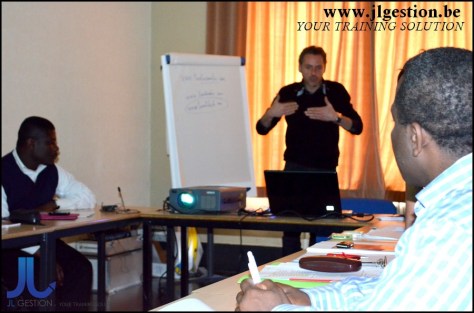
Training Java EE Web Application Development with Enterprise JavaBeans and Web Services – 5 days

Class overview :

This training course provides participants with the knowledge and experience required to develop and deploy Enterprise JavaBeans, Web Services and robust Java EE (Java Enterprise Edition) web applications.

Class goals :

The focus of the course is on building components that are deployed to the EJB Container and building web-enabled applications that employ Servlets, JavaServer Pages and Tag Libraries to exploit the services provided by the Java EE platform. This course covers architectural design issues as well as specific coding models for Java EE components, and is up to date with the latest Java EE 5, EJB 3, JAX-WS 2.1, JSP 2.1 and Servlet 2.5 specifications. Security, transaction management, inter-component communication and deployment issues are discussed in detail, with hands-on labs to solidify understanding.

Since coding and deployment files are standardized by the Java EE specifications, students may readily apply the skills learned in this class to write code for any compliant server, including Apache Tomcat, JBoss, WebSphere, Oracle, WebLogic and many others. Students will understand the role and architecture of the most important containers in the Java EE specification: the Web Container (which hosts HTML pages, Servlets and JSP Pages) and the EJB Container (which hosts Enterprise JavaBean components). Participants will learn how to use important Java EE services and protocols including JNDI, JDBC and JMS. Students will learn how to utilize ANT, a flexible and powerful XML-based build utility, to compile, deploy and execute stand-alone and enterprise Java applications. Comprehensive hands-on lab exercises reinforce instructor lectures and build direct competence in the topics presented throughout the course.

Content of Java EE Web Application Development with Enterprise JavaBeans and Web Services

  • Introduction to the Java EE Architecture
  • Using ANT
  • Servlet Classes and Interfaces
  • Request and Response Objects
  • Writing a Servlet
  • Web Application Structure
  • Introduction to Java Server Pages
  • Deploying a JSP
  • JavaBeans in a JSP
  • JSP Document Syntax
  • Communication Between Web Components
  • Java EE Session Support
  • Creating Cookies
  • Writing Custom Tag Libraries
  • JSP Expression Language
  • Developing Secure Web Applications
  • Java EE Authorization
  • Serializing with Object Streams
  • JNDI Architecture
  • Java DataBase Connectivity (JDBC)
  • Java Message Service (JMS) Classes and Interfaces
  • Deploying a Filter
  • Listeners in the Web Container
  • Resource Injection in Servlet 2.5 Applications
  • Overview of Enterprise JavaBeans (EJB)
  • Writing Session, Message-Driven and Entity Beans
  • Introduction to the Java Persistence API
  • Implementing Finder Methods
  • Object-Relational Mapping with JPA
  • Web Services in Java EE and Java SE
Java EE Web Application Development with Enterprise JavaBeans and Web Services
Training Java EE Web Application Development with Enterprise JavaBeans and Web Services

Onze voordelen :

  • Type of training: Inter-company, intra-company and individual
  • 100% flexible & personalised training : You choose the place, the dates and the training program
  • Offer request : Response within 24 hours
  • 50% discount for SME’s from Brussels-Capital Region
  • Free parking, lunch & drinks
  • Free use of our Digital Competence Centre: Manuals, courses, exercises, …
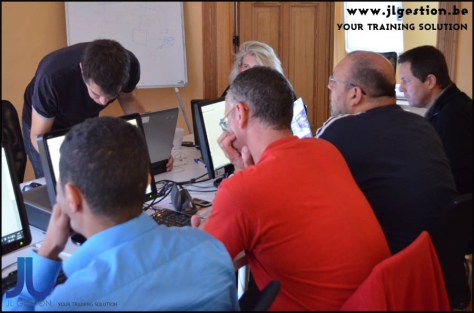
This training course provides participants with the knowledge and experience required to develop and deploy Enterprise JavaBeans, Web Services and robust Java EE (Java Enterprise Edition) web applications.

Training Programming Java EE and Frameworks – 5 days

Class overview :

This course provides students hands on experience with cutting edge Java Enterprise (Java EE) technologies, creating dynamic web and enterprise applications that utilize several Java frameworks and technologies including JSP’s and Servlets, Java Persistence API (JPA), JNDI, JDBC, AJAX, Web Services, Spring and Hibernate.

Class goals :

The goal is to enable students to exploit the Java EE platform and accompanying frameworks to facilitate the development of distributed, web-enabled applications.

Students will architectural design issues as well as specific coding models for a variety of Java EE components. By working with several Java frameworks in hands on labs, students will build applications that incorporate many of the patterns commonly used in these and other Java frameworks. Upon completion of the course, students should be able to learn and effectively utilize frameworks appropriate for their application environment.

Starting with Java Server Pages and Servlets, the course then introduces some of the most widely used frameworks to provide concrete illustrations of the services available. Since coding and deployment files are standardized by the Java EE specifications, students may readily apply the skills learned in this class to write code for any compliant server, including Apache Tomcat, JBoss, WebSphere, Oracle, WebLogic and many others.

Students will learn how to utilize ANT, a flexible and powerful XML-based build utility, to compile, deploy and execute stand-alone and enterprise Java applications. They will also use ANT to execute standalone client applications that communicate with Java EE applications. Comprehensive hands-on lab exercises reinforce instructor lectures and build direct competence in the topics presented throughout the course.

Content of Programming Java EE and Frameworks

  • Introduction to the Java EE Architecture
  • Using ANT
  • Servlet Classes and Interfaces
  • Request and Response Objects
  • Writing a Servlet
  • Web Application Structure
  • Introduction to Java Server Pages
  • Deploying a JSP
  • JSP Document Syntax
  • Communication Between Web Components
  • Database Persistence with and without Hibernate
  • Designing with Spring
  • Adding Spring to Existing Solutions
  • AJAX Integration with Java
  • Web Services in a Java Environment
  • Working with AJAX Toolkits
  • RESTful Web Services
  • AJAX Patterns
Programming Java EE and Frameworks
Training Programming Java EE and Frameworks

Onze voordelen :

  • Type of training: Inter-company, intra-company and individual
  • 100% flexible & personalised training : You choose the place, the dates and the training program
  • Offer request : Response within 24 hours
  • 50% discount for SME’s from Brussels-Capital Region
  • Free parking, lunch & drinks
  • Free use of our Digital Competence Centre: Manuals, courses, exercises, …

This course provides students hands on experience with cutting edge Java Enterprise (Java EE) technologies, creating dynamic web and enterprise applications that utilize several Java frameworks and technologies including JSP’s and Servlets, Java Persistence API (JPA), JNDI, JDBC, AJAX, Web Services, Spring and Hibernate.